Most visitors know Kobe for its harbour, its beef and its sake. Fewer know that much of Japan’s footwear was once made in a working-class ward west of the centre — and this weekend, that ward is holding a sale that may not happen again.
KOBE Kutsu Marche vol. 13 runs from Saturday 21 to Monday 23 November 2026 at Shoes Plaza in Nagata Ward. It is the biggest edition yet — 20 brands, according to the organisers — and, because of the building’s contract situation, they say this may be the last one.
1. A Shoe Sale Born in Nagata
Kutsu Marche began as a stock-clearance sale organised by Nagata’s own shoe makers. Local manufacturers and retailers sell their shoes directly, without the usual shop markup — which is why the event has built a steady following over 13 editions.
The last edition drew about 4,000 visitors, according to the organisers, with 17 brands taking part. This time the line-up grows to 20, the largest so far, with new makers joining the regulars.
Among the names reported for this edition are Shoes in Kobe, the previous edition’s best seller, along with Farfalle, Tukun and Trecode, plus long-established makers and a newly participating leather-shoe maker. Local reports describe discounts of up to 80% off, with shoes normally priced around ¥9,000 on sale from around ¥2,000 — worth treating as a guide, not a guarantee: prices vary by brand and stock, and popular sizes go first.
2. Why Nagata Is Japan’s Shoe Town
The sale only makes sense with Nagata’s history behind it.
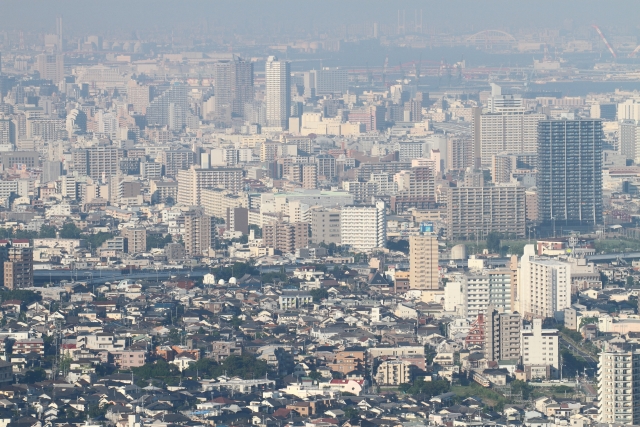
Nagata’s synthetic-shoe industry was established in the early 1950s, and by 1994 it accounted for almost 80% of Japan’s total production of synthetic shoes, according to academic research on the district. Small workshops divided the work between them — cutting, sewing, gluing heels and soles — in a dense network of makers and suppliers.
The Great Hanshin-Awaji Earthquake of 1995 destroyed much of that network. Factories collapsed and burned, and production was still only around 60% of its pre-quake level more than five years later. The makers who stayed rebuilt, and Nagata still produces much of Japan’s domestically made women’s footwear today.
3. Nagata Beyond the Recovery Story
Nagata is usually introduced through the earthquake, and then left there. The picture on the ground is more mixed than the coverage suggests.
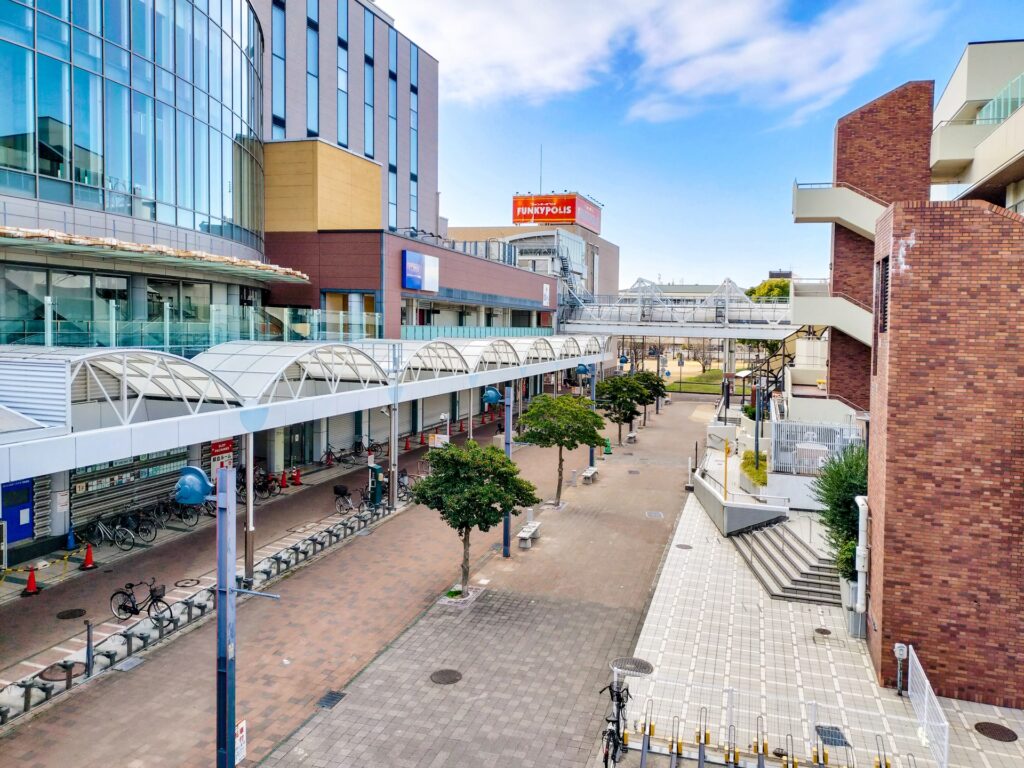
According to Kobe City’s own verification report on the Shin-Nagata redevelopment, the district south of the station is now home to about 6,058 people — up from 4,456 just before the earthquake, an increase of roughly 40%, as new housing brought residents back. What has not recovered in the same way is commerce: the number of businesses in the district has fallen by nearly half, and shoppers are drawn away to Sannomiya and the city centre, as they are everywhere in Japan.
That is the honest context for an event like this. A district that is not the centre cannot compete with the centre on the centre’s terms. What it can do is hold events rooted in what it actually makes — and Nagata makes shoes. A sale like Kutsu Marche is a small, practical way for a local industry to bring people into its own streets.
Which is why the possibility that this is the last edition is worth pausing on. The stated reason concerns the building’s contract, and the details are not public. But if events outside the centre keep quietly shrinking — one contract, one budget at a time — the city becomes a little more uniform each year. That would be a loss, and not only for Nagata.
4. Kobe Shoes on the World Stage: The ASICS Contrast
There is a second Kobe shoe story running in parallel, at the opposite end of the scale.
ASICS, founded in Kobe, spent decades with a plain, school-sports image at home. That has changed. After withdrawing from baseball, the company concentrated on running shoes, just as running became a global habit rather than a niche sport. A reputation for durable, well-made Japanese products has fitted that market well, and the business is now in strong health worldwide. Onitsuka Tiger, its fashion line — now being spun off into its own company — is growing quickly too, opening stores across the world.
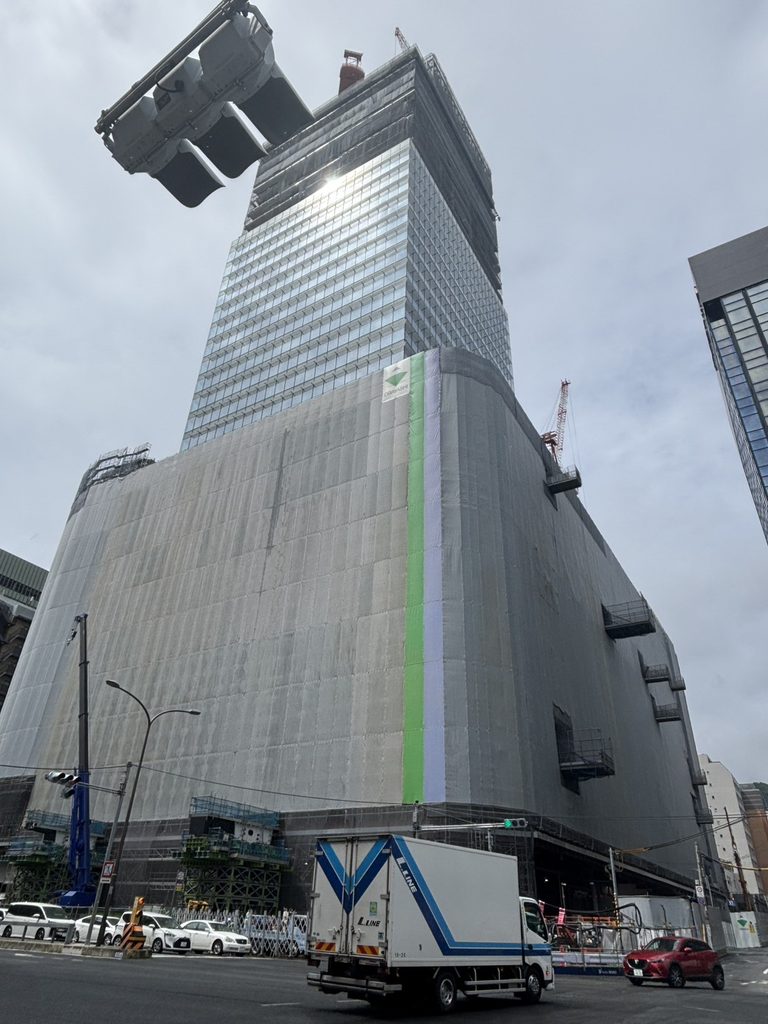
From January 2028, ASICS will move its headquarters into the Twin Gate tower rising beside Sannomiya Station, a building this site has been following throughout its construction. Kobe’s global shoe company is, quite literally, moving into the city’s new front door.
The point of putting the two stories side by side is not to compare them. It is that both are Kobe shoe stories. The makers of Nagata and the global brand in Sannomiya come from the same city — one that has long been called hakidaore, the city that spends on what it wears, as Osaka spends on what it eats. Nagata’s workshops kept that city shod for seventy years. If ASICS’ moment brings fresh attention to Kobe and shoes, it would be good to see some of it reach the ward where the industry began.
5. More Than Shoes: Food at the Marche
The event has grown beyond footwear. Food stalls are a bigger part of this edition, and they are worth planning around if you go.
Reported for this year: a new onion soup made with 100% Kobe pork from Minato Dining, a popular stall from the previous edition; sweets from Itayado’s long-established Meigetsuan; coffee from Nakamura Coffee, appearing for the first time; and Taiwanese dishes, including pepper buns and lu rou fan (braised pork rice). As with the shoes, the food stalls are individual vendors — check the event’s official Instagram (@kobe_kutsu_marche) for the latest line-up before you go.
6. The Landmark to Look For
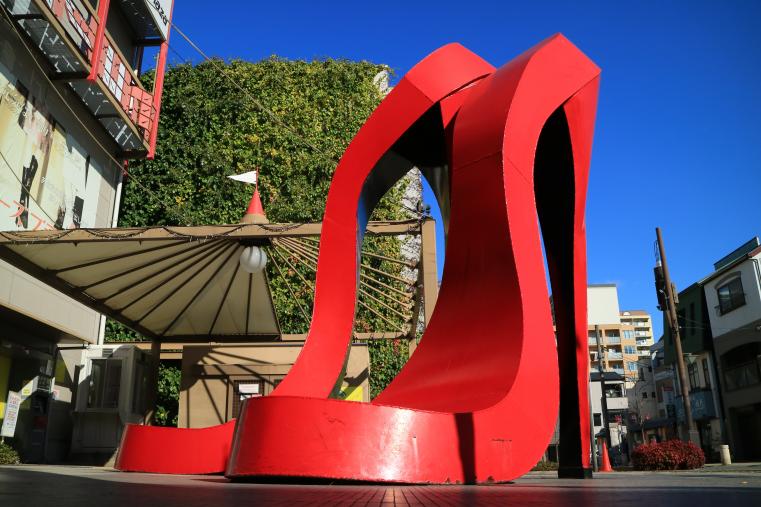
The venue itself is easy to find: Shoes Plaza, marked by a giant red high heel outside. Inside, the sale is on the first floor. Entry is free; you pay only for what you buy.
7. Getting There — and the Trap
This is a short, walkable trip from central Kobe, but the final day closes early — the one detail to plan around.
- By train: Shin-Nagata Station (JR and the Seishin-Yamate subway line) is 3 minutes’ walk north. Seidai Station on the Sanyo Railway is 5 minutes’ walk south.
- Hours: Saturday 21 November and Sunday 22 November, 10:00–17:00. Monday 23 November (a public holiday), 10:00–15:30.
- The trap: Monday is the last day, and it closes at 15:30 — ninety minutes earlier than the weekend. If you are aiming for the final day, go in the morning.
- Admission: Free. Shoes and food are paid, individually.
- A practical note: this is a clearance-style sale, so sizes and stock are limited. If you have a specific size in mind, try shoes on at the stall — and go earlier in the day for the best choice.
8. Practical Details
- Name: KOBEくつマルシェ vol. 13 (KOBE Kutsu Marche)
- Dates: 21–23 November 2026 (Sat–Mon, public holiday)
- Hours: 21–22 Nov, 10:00–17:00; 23 Nov, 10:00–15:30
- Venue: Shoes Plaza, 1st floor, Nagata Ward, Kobe — look for the giant red high heel
- Access: Shin-Nagata Station (JR / Seishin-Yamate subway), 3 min on foot; Seidai Station (Sanyo Railway), 5 min on foot
- Admission: Free; shopping and food are paid
- Scale: 20 brands, the largest edition yet (17 brands and about 4,000 visitors last time, per the organisers)
- Why now: Organisers say this may be the last edition, because of the building’s contract situation
- Official information: Kobe City event site; event Instagram @kobe_kutsu_marche