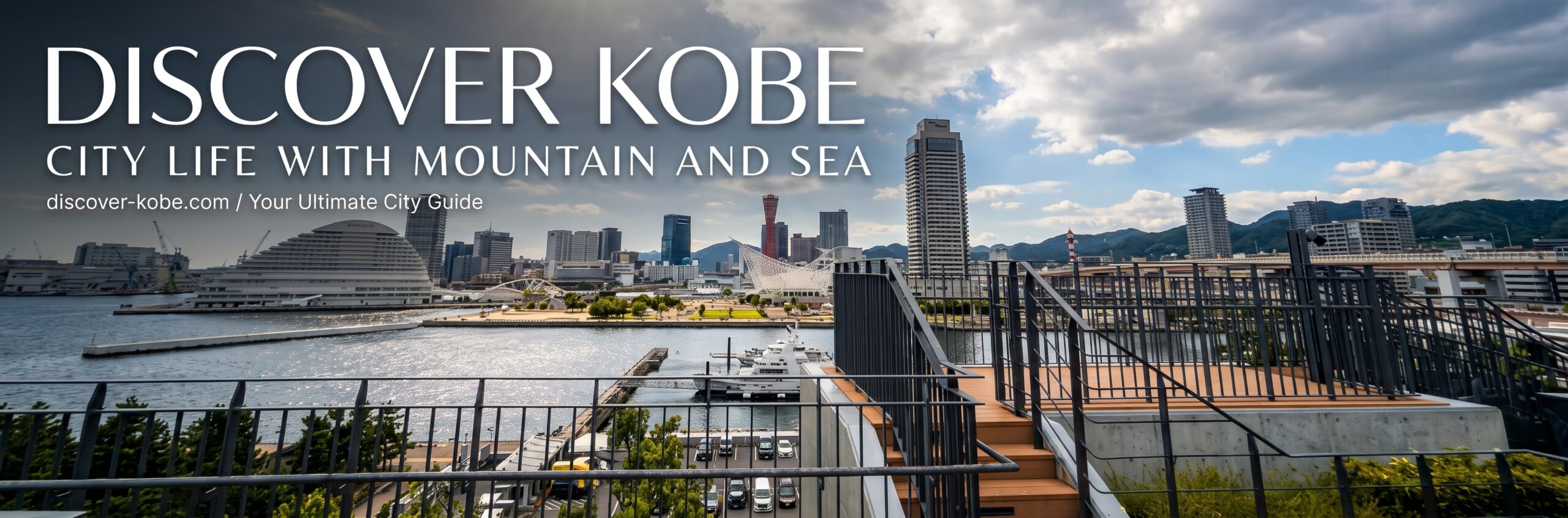
Kobe sells itself as a port city, and most visitors never look up. Yet twenty minutes by car from Sannomiya, the streets give way to a mountain pond ringed with maples — and this week, those maples are at their peak.
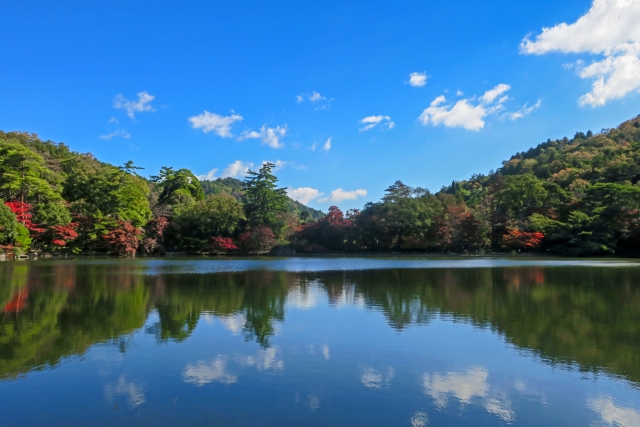
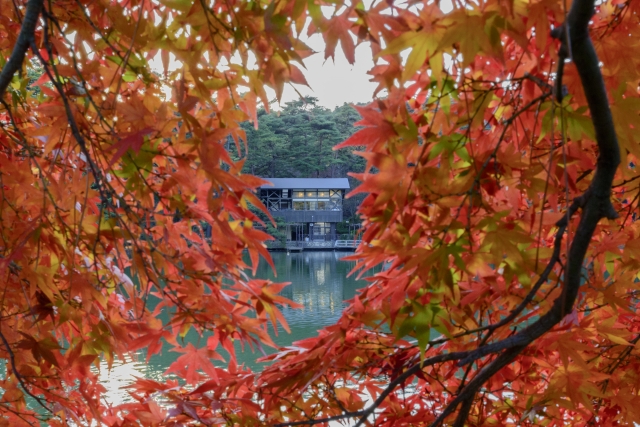
At Futatabi Park (再度公園), in the Rokko range above the city, the Japanese and mountain maples around Shuhogahara Pond (修法ケ原池, also read Shiogahara) have turned. The colour arrived about a week later than usual this year, according to the Kobe City forest maintenance office, and the peak is expected to last through this week. If you want to see it, this three-day weekend is effectively your last chance: the leaves are forecast to begin falling around 29 November.
1. A Different Kobe, Twenty Minutes Away
Futatabi Park sits at around 390 metres above sea level on the slopes of Mt. Futatabi (470 m), in Yamada-cho, Kita Ward. It is a large urban park — some 51.5 hectares, opened in 1937 — built around forest and one still, dark pond.
The pond is the point. Iroha maples, mountain maples, konara oaks and wax trees crowd its banks, and on a calm day the colours double themselves in the water. Hikers passing through on the Rokko trails stop here; families spread out on the benches; the city, visible in the distance on the drive up, feels much further away than twenty minutes.
This is the other half of Kobe’s geography. The city is famously squeezed between the sea and the Rokko mountains, and Futatabi is where that mountain half becomes a place you can walk in, rather than a backdrop.
2. Why “Futatabi” Means “Again”
The name is a story. Shuhogahara — “the field of ascetic practice” — is said to be where Kobo Daishi, the revered monk also known as Kukai, trained before sailing to China. When he returned to Japan, he came back to this mountain a second time. Futatabi (再度) literally means “a second time” — “again.”
It is a fitting name for a park most Kobe residents themselves have driven past for years without stopping, and then keep returning to once they discover it. Autumn is simply the most persuasive reason to make that first visit.
3. More Than a Park: Scenic Beauty, a Foreign Cemetery, and the Birthplace of Rokko Reforestation
Futatabi is not just a pretty pond. In February 2007, Futatabi Park, the Mt. Futatabi Permanent Vegetation Reserve and the Kobe Municipal Foreign Cemetery were together designated a National Place of Scenic Beauty — the first time a city park in Japan received that designation.
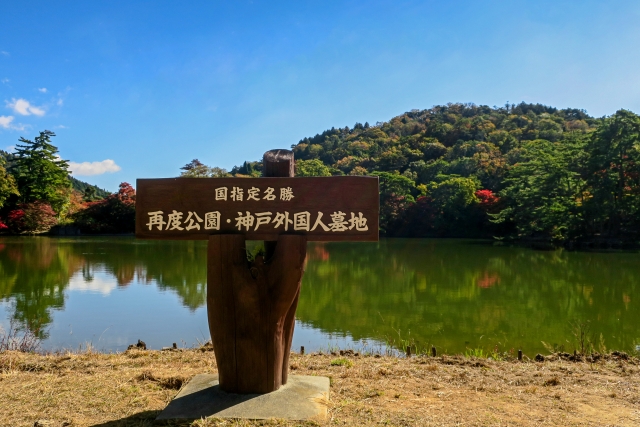
Two threads of Kobe’s history meet here:
- The foreign cemetery. Kobe has been an international port since 1868, and the foreign residents who lived and died here are buried on this hillside. The cemetery grounds are open to general visitors only on designated open days, which require advance application. The chapel and observation deck on the hill above, however, are open to everyone (10:00–16:30, closed in winter from December to March), and the chapel shows a video on the cemetery’s history.
- The reforestation of Rokko. The bare Rokko mountains were replanted from 1902 onwards in one of Japan’s pioneering reforestation projects, and this area is regarded as its birthplace. The dense forest that makes the autumn colour possible exists because Kobe chose, over a century ago, to grow it back.
4. Walking the Pond
The basic experience is simple: a walking path circles Shuhogahara Pond, and the colours are best where the maples hang over the water. The road in front of the foreign cemetery’s main gate is a noted viewpoint, looking across the trees rather than up at them.
Because the park connects directly to major hiking routes — the Rokko traverse trail and the Taishi-michi path down to Tairyuji Temple — it works equally well as a gentle stroll, a picnic stop on a drive over the Futatabi Driveway, or the scenic midpoint of a proper mountain hike.
There is no illumination here and no festival machinery. That is the appeal: this is the quiet end of Kobe’s autumn, best in daylight, ideally on a still morning when the pond is flat.
5. Getting There — and the Traps
This is where visitors most often go wrong, so read this section before you set out.
- By bus: City Bus No. 25 runs from Sannomiya Bus Terminal towards the Kobe Municipal Arboretum (Forest Botanical Garden); get off at Futatabi Park. The journey takes roughly 25 minutes. However, the bus runs only on Saturdays, Sundays and holidays, from April to November — there is no weekday service, and no service at all from December to March.
- The last bus trap: The last bus back towards Sannomiya leaves in the 16:00 hour. Miss it, and your options narrow quickly. Plan your visit around it, not the other way round.
- By car: About 20 minutes from Sannomiya via the Futatabi Driveway, past Venus Bridge and Tairyuji Temple. The park has free parking for around 180 cars, though it can fill completely on event days.
- Signal: The park is in the mountains and mobile reception is unreliable. Download anything you need before you go.
- Rules: Barbecues, fireworks, fishing and camping are prohibited. Dogs must be kept on a lead.
6. Practical Details
- Name: Futatabi Park (再度公園) and Shuhogahara Pond (修法ケ原池)
- Location: 4-1 Nakairiyama, Shimotaniue, Yamada-cho, Kita Ward, Kobe
- Admission: Free
- Hours: Open at all times (the cemetery, chapel and shops keep their own hours)
- Autumn colour: Typically mid to late November. In 2026 the colour came about a week late; the peak was reported on 18–20 November and is expected to last through the week, with leaves beginning to fall around 29 November.
- Access: City Bus No. 25 from Sannomiya (weekends and holidays only, April–November; last return bus in the 16:00 hour), or about 20 minutes by car from Sannomiya. Free parking for around 180 cars.