The Strategic Pivot: Beyond the Concentrated City
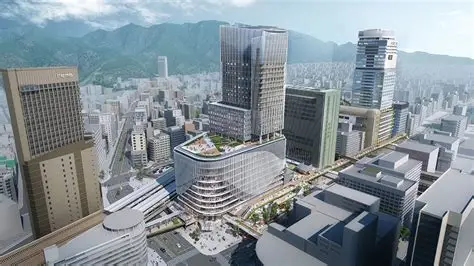
While the skyscrapers of Sannomiya capture the headlines, the true resilience of Kobe is being forged in its satellite hubs. The “Renovation Kobe” initiative, launched as a comprehensive urban policy, seeks to breathe new life into suburban railway nodes that were developed during the rapid growth of the late 20th century. By modernising infrastructure and concentrating public services in key areas like Myodani, Seishin-chuo, and Tarumi, the city is creating high-quality residential environments that rival the convenience of the centre. This is not a scattered attempt at beautification; it is a calculated effort to ensure that Kobe remains a choice for families and young professionals who seek a balance between career and quality of life.
The true brilliance of this policy is its relationship with the “Tower Mansion Ban” in city centre. I’ve often thought that a city which allows its central station to become a residential park is a city that has given up on its economic future. By strictly prohibiting residential towers in the core, the city creates a “push-pull” dynamic. The core is for “earning power” and business; the suburbs are for “living and restoration.” This discipline prevents the hollowed-out “shutter towns” of the future and forces the administration to elevate the quality of the suburbs to a level where people want to live there, rather than just having to live there. It is a hard-nosed, fair-minded approach to urban management that I fully endorse.
Myodani: The Model for Family-Centric Renewal
As a major node on the Seishin-Yamate underground Line, Myodani has become the vanguard of the renovation strategy. The redevelopment of the station front includes the extensive expansion of the Kobe City Library and the creation of “Oyako-fura,” a specialised facility for child-rearing support. Beyond public services, the commercial facilities like “tete” have been refreshed to offer a modern, curated shopping experience. These interventions are designed to make Myodani a “compact city” in its own right, where daily needs and high-quality education are within walking distance of the station.
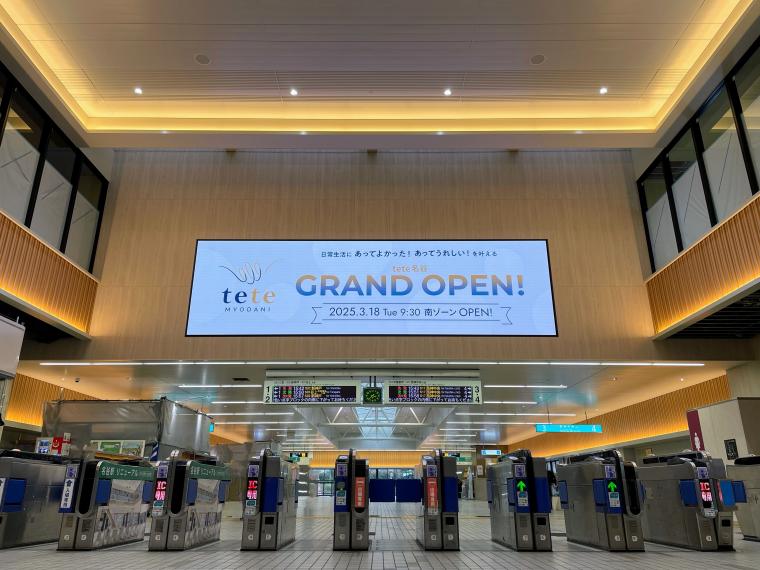
For peole interested in history, the transformation of Myodani is fascinating. It was built as a “New Town” to solve the housing shortages of the past, but for years, it felt like it was beginning to show its age. Seeing it today, I’m struck by how “active” the atmosphere has become. This isn’t just about painting old walls; it’s about shifting the market value of the area. By moving high-quality libraries and child-care centres to the very front of the station, Kobe is signalling that it values the “human capital” of its residents. It makes the commute to Sannomiya worth it because of the peace and quality waiting for you at the end of the line.
Seishin-chuo: Cultivating the Cultural Sub-Centre
At the terminus of the underground line, Seishin-chuo is undergoing a metamorphosis into a “Cultural Sub-Centre.” The crown jewel of this renewal is the “Nadeshiko Geijutsu Bunka Centre,” which houses a magnificent new library and a professional-grade concert hall. The surrounding station plazas have been redesigned into open, green spaces that encourage community gathering and outdoor events. This focus on cultural infrastructure is intended to attract a demographic that values intellectual and artistic engagement, ensuring that the outskirts of the city are as stimulating as the centre.
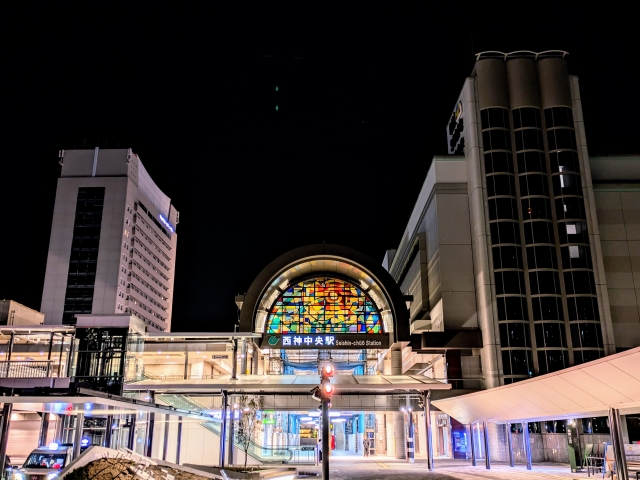
In my view, Seishin-chuo is where the city’s long-term vision for “dignity” truly takes shape. By providing a concert hall and a high-spec library at the edge of the city, Kobe is effectively saying that “culture is not a luxury for the few in the centre.” It is a vital component of a resilient community. When I look at these new facilities, I see a city that is thinking fifty years ahead. They are creating an environment where a child can grow up with world-class books and music at their doorstep, while their parents work in the high-intensity offices of Sannomiya. This is the “synergy” that critics of the redevelopment often fail to grasp.
Tarumi: Reinvigorating the Historic Gateway
Unlike the “New Towns” of the hills, Tarumi is a district with deep historical roots and a complex, organic urban fabric. The current redevelopment involves a massive overhaul of the station front, including a new multi-purpose commercial and residential building and a significant upgrade to the bus terminal and pedestrian paths. The “Tarumi Active Plan” focuses on maintaining the charm of the local shopping streets (shotengai) while introducing modern seismic standards and improved accessibility.
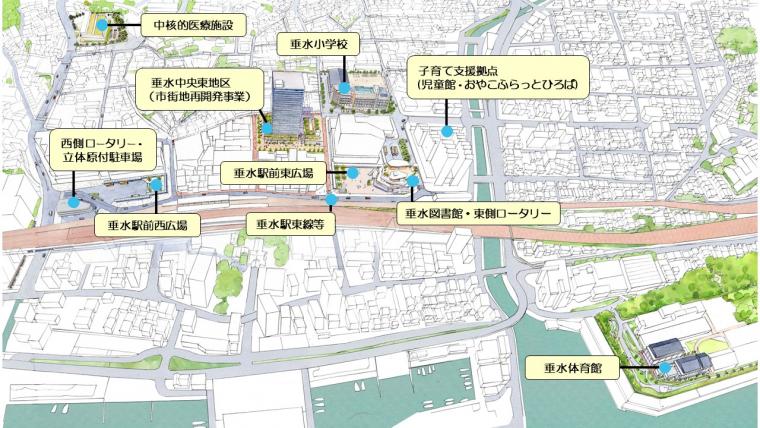
Tarumi has always been a place with a distinct identity—a gateway between the sea and the hills. However, for a long time, the station area felt cluttered and slightly overwhelmed by its own traffic. The current “polishing” of this gem is exactly what was needed. It shows that “Renovation Kobe” isn’t a one-size-fits-all template; it’s a specialised tool adapted to the history of each district. Seeing the traditional markets being integrated into a modern, walkable station front gives me confidence that Kobe can evolve without losing its character. It is a masterclass in urban layering.
The Conclusion: The Discipline of Growth
The “Renovation Kobe” strategy is the silent partner of the Sannomiya skyscrapers. By investing heavily in these satellite hubs, the city has earned the right to keep its centre purely for business and commerce. This clear division of roles is what will prevent Kobe from suffering the “urban sprawl” and eventual decay that plagues so many other cities. While the construction fences in Myodani or Tarumi may be a temporary hurdle, they are the signs of a city that refuses to stand still.
As I have stated before, growth requires a period of “waiting” and discipline. The current inconveniences of redevelopment are a small price to pay for a city that is being systematically future-proofed. Whether it is the 160-metre tower in Sannomiya or the new library in Seishin-chuo, every brick being laid is a testament to Kobe’s resilience and its strategic will to prosper. For those of us looking at the big picture, the horizon has never looked more promising. Let us keep our eyes on the target: a city that is as efficient as it is beautiful.