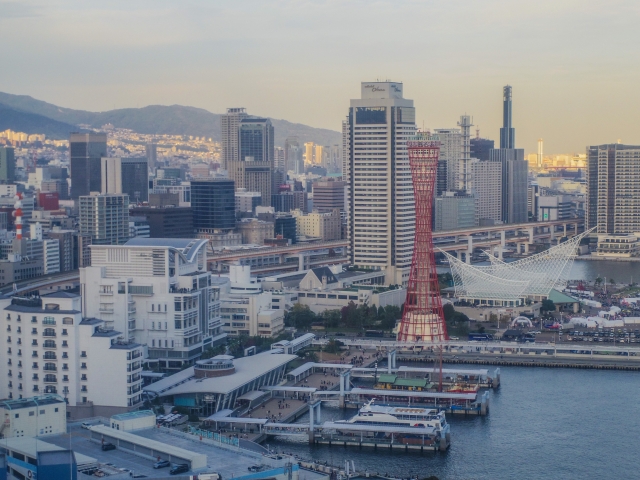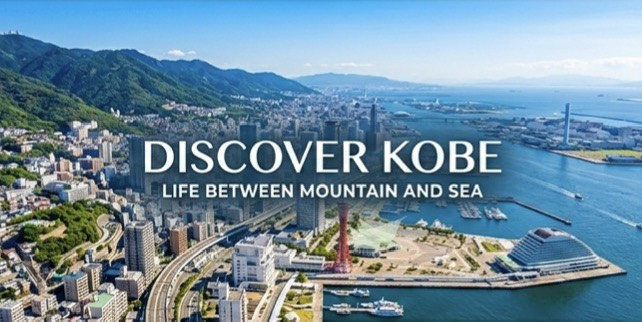
For the past three decades, to the outside observer, Kobe’s urban evolution appeared to have paused. While the skylines of Tokyo or Osaka underwent dramatic, gleaming transformations, Kobe seemed quiet. But this was not stagnation; it was a period of immense, silent discipline.
Kobe was engaged in a marathon struggle that few other cities could fathom: the total repayment of the staggering debt incurred during the 1995 Great Hanshin Earthquake. Unlike the 2011 Tohoku earthquake, Kobe received no massive influx of national recovery grants. It was a self-funded resurrection. Only a few years ago did the city finally clear these financial shackles. Now, with the slate clean and the “Grand Design” finalized over a decade of careful planning, Kobe is finally unleashing its pent-up potential.
- The Great Leap Forward: Moving from Recovery to Global Competition
- The Sannomiya “Eki-Machi” Vision: De-fragmenting the Heart
- The Eastern Waterfront: A New City Rising from the Waves
- Renovation Kobe: The Suburban Lifeline
- The International Leap: Kobe Airport’s Global Takeoff
- Conclusion: A City with a Master’s Perspective
The Great Leap Forward: Moving from Recovery to Global Competition
For 30 years, Kobe’s focus was survival and restoration. It was impossible to look toward “grand designs” when every yen was earmarked for debt servicing. During this “silent period,” Osaka transformed its station area into a world-class hub, and Kyoto unveiled its futuristic terminal in 1999. Kobe, by necessity, was a latecomer to the urban competition.
However, this delay has been turned into a strength. The city has spent the last 10 years meticulously planning its “Re-Evolution.” This isn’t just about building tall structures; it’s about maintaining urban functions in a shrinking society and enhancing international competitiveness. One municipality, through sheer grit, has moved from a “defensive” phase of debt to an “offensive” phase of growth. This is a feat of urban resilience that deserves nothing less than total praise.
The Sannomiya “Eki-Machi” Vision: De-fragmenting the Heart
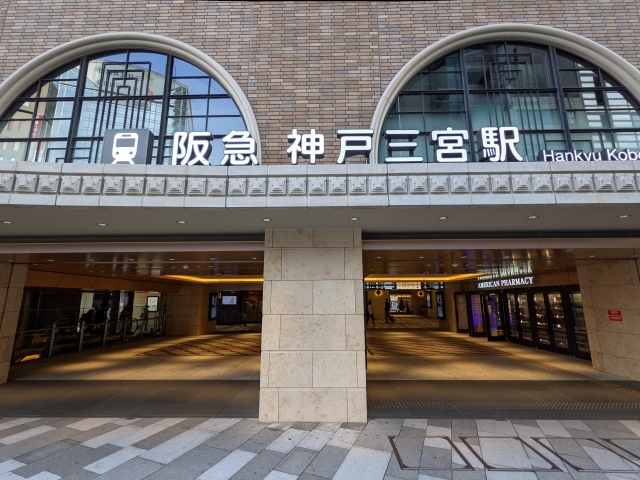
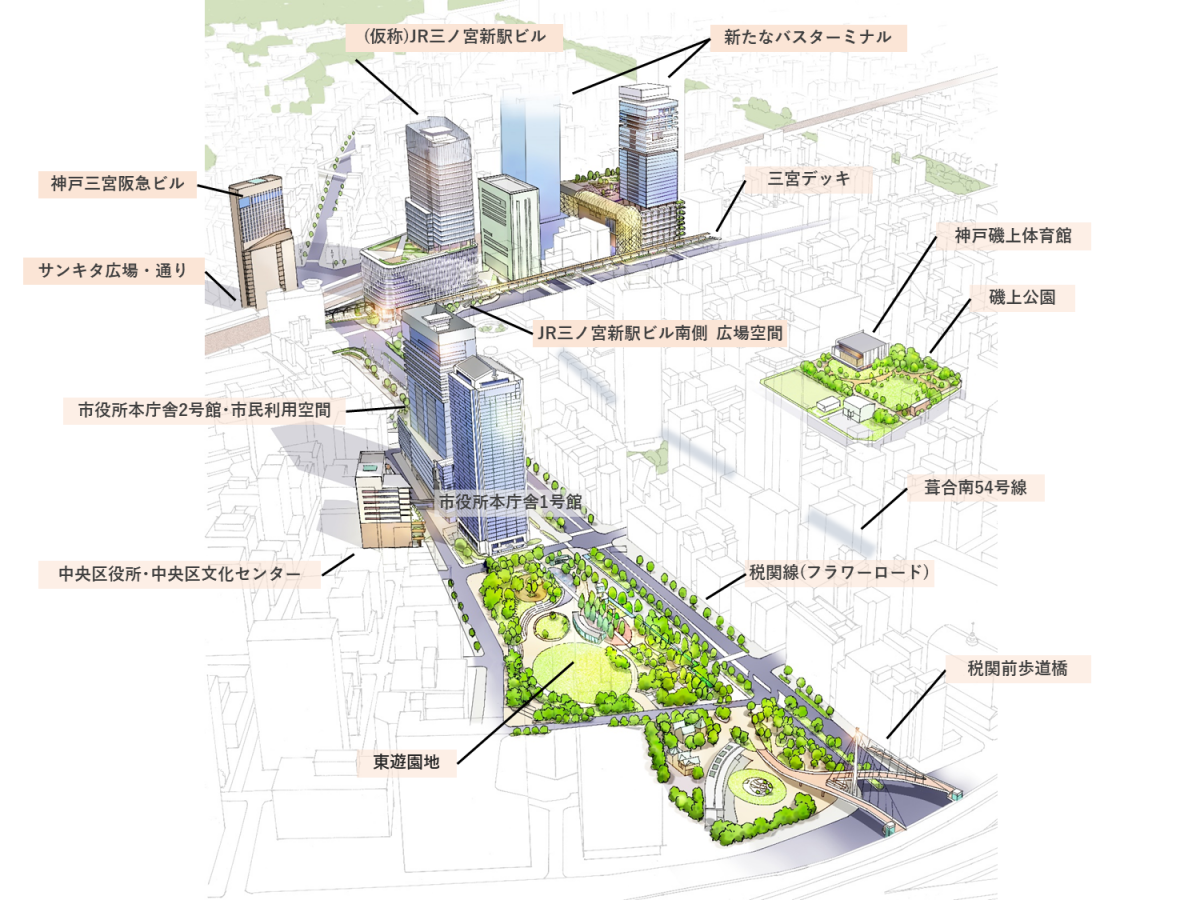
The core of this evolution is Sannomiya—the city’s primary transport and commercial knot. While six different railway lines converge here, the transfer experience has historically been a nightmare of poor flow and fragmented levels.
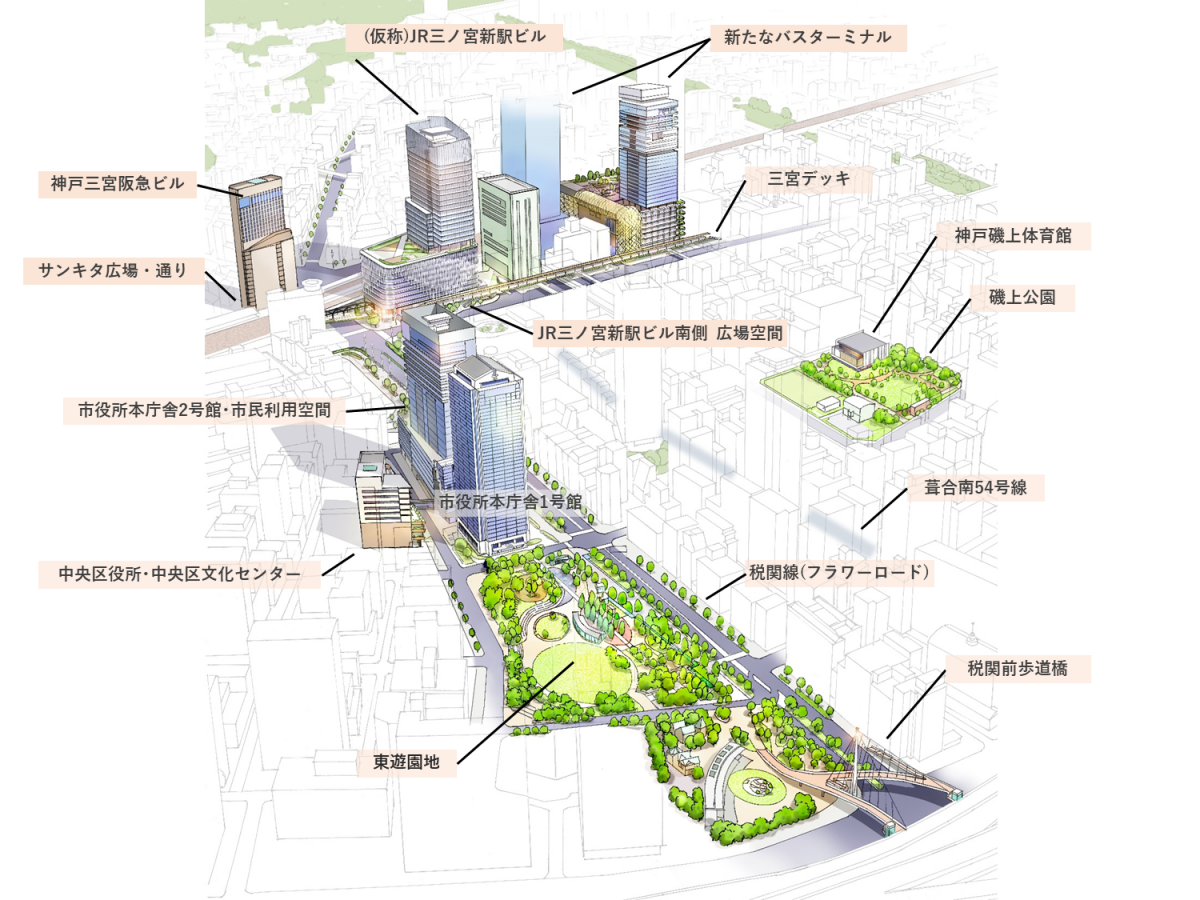
The “Eki-Machi” (Station-Town) Concept is the cure. By weaving together station buildings, a sophisticated pedestrian deck network, and a multi-layered underground mall system, Kobe is creating a seamless “vertical city” transit experience.
The Giants of the New Skyline:
- Kobe Hankyu Building (2021): The pioneer that signaled the start of the new era.
- JR Sannomiya New Station Building: The massive future anchor of the district.
- Kobe Sannomiya Twin Gate: A dual-tower project that will redefine the eastern approach.
- City Hall Building No. 2: Set to host a Conrad Hotel in its upper storeys, bringing a new level of global luxury to the civic centre.
The Bold Strategy: The Tower Mansion Ban
Perhaps the most distinctive feature of the current administration’s policy is the strict ban on new high-rise condominiums (tower mansions) in the central district. While other cities chase the quick tax revenue of residential towers, Mayor Hisamoto has taken a different path.
This isn’t just about preserving the view; it’s about Urban Function Concentration. To maintain its “magnetic pull” as a city, the centre must be a powerhouse of business, commerce, and tourism. By prioritizing office space and hotels over residential towers, Kobe is ensuring that its heart remains a place where people do things, rather than just sleep. This is “Zoning with a Vision.”
The Eastern Waterfront: A New City Rising from the Waves
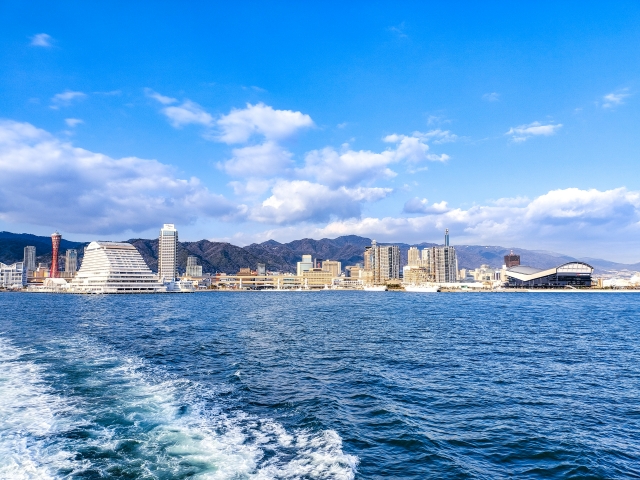
Kobe’s waterfront is no longer just a memory of Harborland’s success. The focus has shifted east to the Shinko Pier District. Just as the cargo containers moved to Port Island and Rokko Island years ago, they left behind a canvas for a modern urban miracle.
In just a few short years, a brand-new district has appeared. It features:
- The “Last” Twin Residential Towers: The final residential skyscrapers allowed in the central area.
- The “atoa” Aquarium: A sophisticated, artistic cultural landmark.
- Corporate Headquarters: Companies like Felissimo have moved their creative hearts here.
- G-Lion Arena Kobe: Opened in 2024 to host world-class entertainment and sports.
- The Yacht Marina & Floating Restaurants (2027): Adding a layer of luxury to the bay.
The waterfront is expanding. The iconic night view that was once anchored by Harborland and Meriken Park has stretched eastward, creating a vast, shimmering maritime corridor. The next step? An LRT (Light Rail Transit) system and an extensive Sea Deck to connect these coastal gems with the transport hubs of Sannomiya and Kobe Station, ensuring the city is as walkable as it is beautiful.
Renovation Kobe: The Suburban Lifeline
If Sannomiya is for “Work and Play,” the suburbs are for “Life and Supply.” The city recognizes that the “New Towns” developed during the high-growth era are now facing a demographic crisis—ageing populations and shrinking numbers.
The “Renovation Kobe” project is the city’s aggressive answer to this decline. By focusing on the underground corridors, Kobe is revitalizing key nodes like Myodani and Seishin-chuo.
- Station Beautification: Making the daily commute a dignified and pleasant experience.
- Placemaking: Rebuilding station-front plazas to encourage multi-generational interaction.
- Commercial Reinforcement: Upgrading shopping centres to meet modern needs.
- Private Investment: By cleaning up the public realm, the city is successfully incentivizing private developers to build high-quality new housing.
This strategic division—strengthening the “hub” (Sannomiya) while simultaneously polishing the “residential nodes” (Suburbs)—is a masterfully balanced approach. It’s a “Smart City” strategy that values the suburbs as much as the glittering downtown.
The International Leap: Kobe Airport’s Global Takeoff
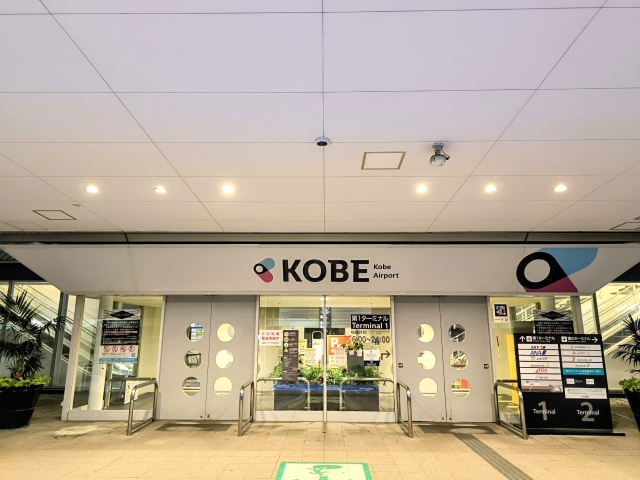
Finally, Kobe’s reach is extending across borders. After a long and winding history, Kobe Airport has finally embraced internationalization. While it currently handles international charter flights, the year 2030 will see the official launch of scheduled international services.
This is a game-changer. A global gateway located so close to the city centre will have a massive ripple effect on the Biomedical Innovation Cluster on Port Island. It justifies the massive hotel and office investments currently seen in Sannomiya. The “International Port City” of the past is evolving into the “International Airport City” of the future.
Conclusion: A City with a Master’s Perspective
Kobe’s re-evolution ans redevelopment plans are not desperate scramble to catch up; it is a meticulously timed, strategically zoned, and financially disciplined transformation. By distinguishing the roles of each district—business in the heart, entertainment on the coast, and quality living in the suburbs—Kobe is building a resilient urban model that is both “clever” and “visionary.”
The wait is over. The debt is paid. Kobe is back on the world stage, and the best is yet to come.