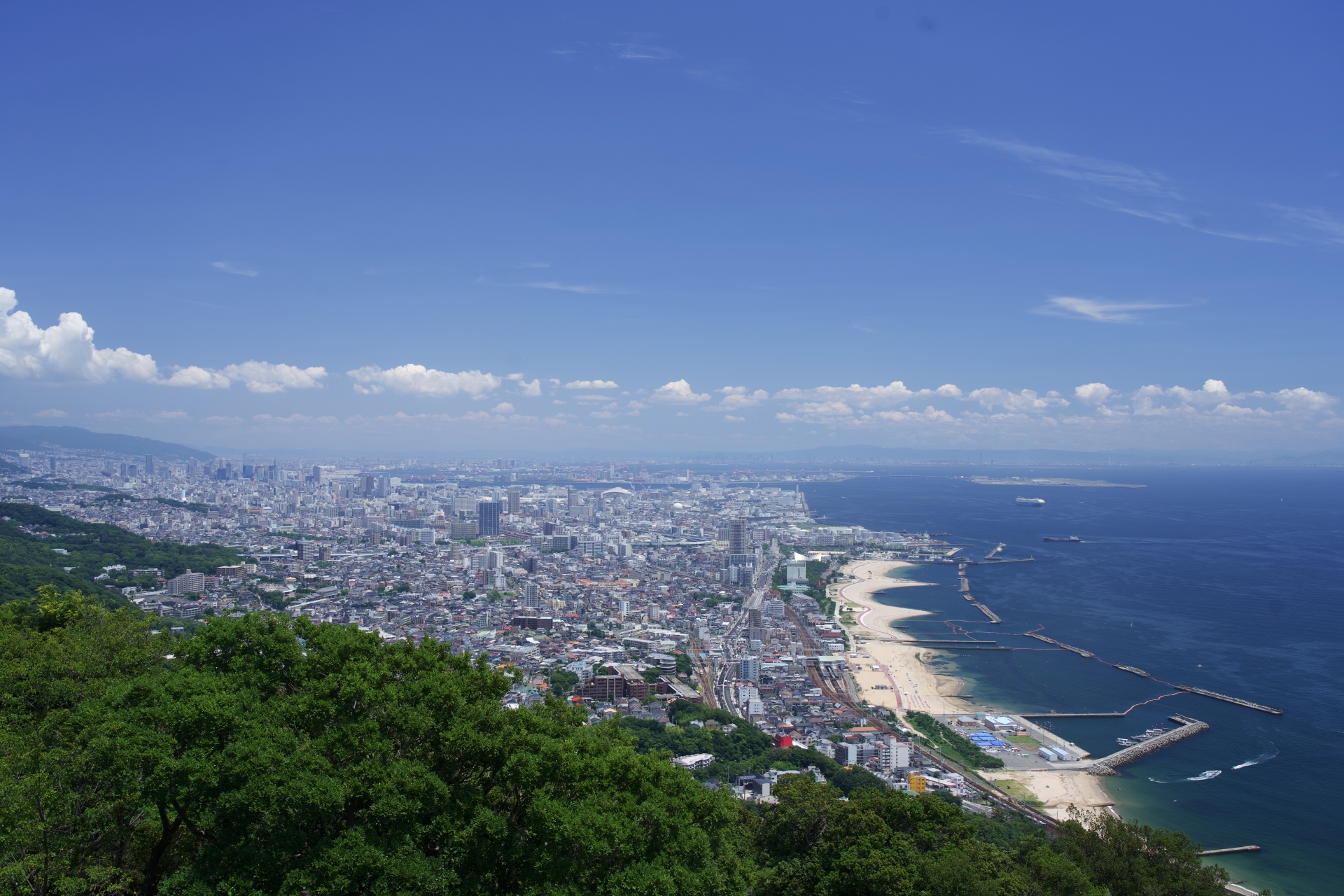
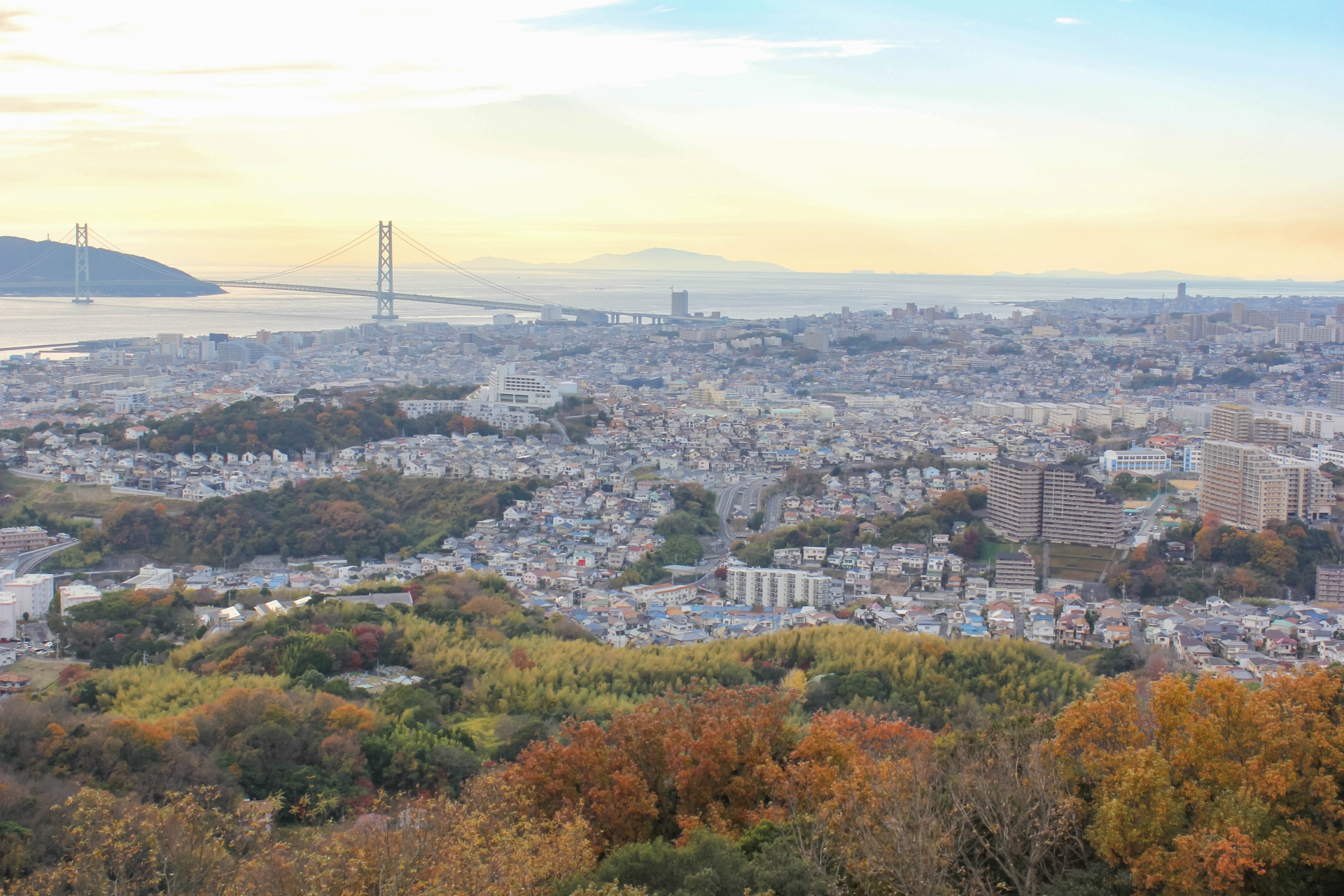
As we continue our journey westward along the Kobe coastline, the landscape begins to open up into one of the most breathtaking vistas in Japan. We have arrived in Tarumi-ku.
Tarumi is a district that commands respect. It is home to the world’s most impressive suspension bridge, a 1,600-year-old imperial tomb that defies logic, and a revitalised waterfront that blends resort-style leisure with the gritty, honest energy of a traditional fishing port. While it is often the final stop for those exploring Kobe’s urban wards, Tarumi is far from an afterthought—it is a powerful statement of Kobe’s identity as a city that bridges the gap between the ancient past and the global future.
The Pearl Bridge: A Giant Born of Resilience
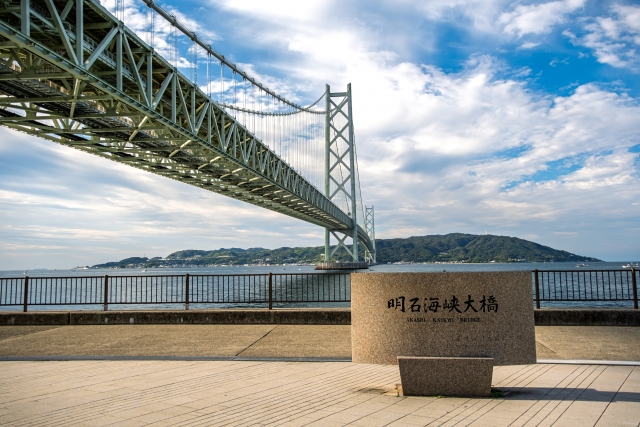
The defining silhouette of Tarumi is, without question, the Akashi Kaikyo Bridge (affectionately known as the Pearl Bridge). Spanning the strait between Kobe and Awaji Island, its scale is truly difficult to comprehend until you are standing beneath its massive towers.
Interestingly, its name often leads visitors to believe it belongs to our neighbours in Akashi City, but let there be no mistake—the Kobe-side anchorage is firmly planted in Tarumi’s Maiko district. This bridge is a symbol of the “Urban-Nature Harmony” that defines Kobe, providing seamless access to the resort developments and lush landscapes of Awaji Island.
There is a remarkable piece of history hidden within its steel cables. During its construction, the Great Hanshin-Awaji Earthquake of 1995 struck. The sheer force of the tectonic shift actually moved the bridge’s towers, resulting in the entire span stretching by exactly one metre from its original design. The fact that the bridge was completed despite this is a testament to Japanese engineering honour. For those seeking a thrill, there is an official programme that allows you to climb to the very top of the bridge’s supporting pillars—offering a view of the Seto Inland Sea that is nothing short of transcendent.
Goshikizuka Kofun: The Ancient Sentinel of the Strait
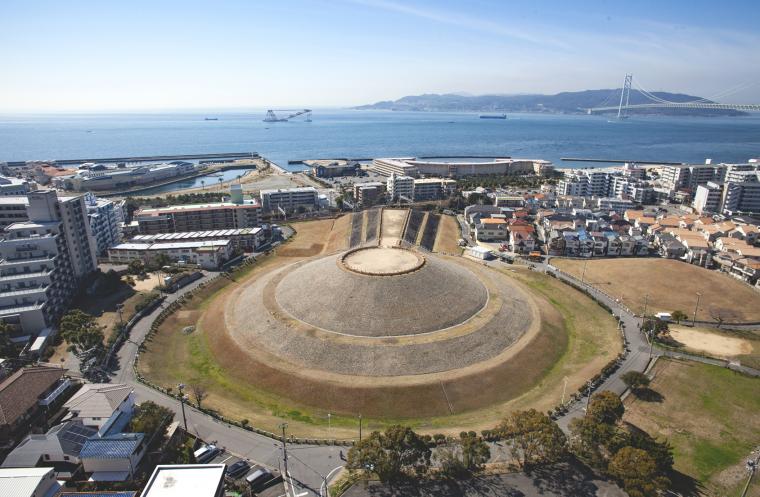
If the Pearl Bridge is a modern marvel, then Goshikizuka Kofun is its ancient ancestor. This is the largest “keyhole-shaped” burial mound (Zenpo-koen-fun) in Hyogo Prefecture, dating back to the late 4th century.
To see such a massive ancient structure—194 metres in length—sitting directly in the middle of a modern residential area is an extraordinary sight. It was built on this specific plateau to overlook the Akashi Strait, the most narrow and vital maritime corridor between the main island and Awaji. Historians believe it was the tomb of a powerful leader who controlled the sea traffic of the era.
The numbers associated with Goshikizuka are staggering:
- The Stones: The mound is covered in approximately 2.23 million stones, weighing an estimated 2,784 tonnes. Geological analysis revealed that the stones for the upper sections were actually transported across the sea from Awaji Island—a massive logistical feat for the 4th century.
- The Haniwa: Around 2,200 clay “Haniwa” figures once stood guard along its terraces.
After a decade-long restoration ending in 1975, the mound was returned to its original glory. Today, it serves as an open-air museum. For local Kobe schoolchildren, a field trip to “Goshiki-san” is a rite of passage. Climbing to the top and looking out over the water, you realise that the view hasn’t changed in 1,600 years—it is still the best seat in the house for watching the world sail by.
Marine Pia Kobe: The Rebirth of the Coastal Resort
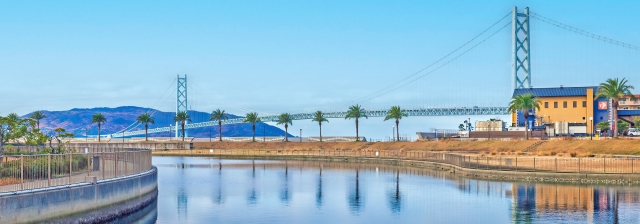
For those looking for modern relaxation, Marine Pia Kobe is the district’s premier destination. Following a massive redevelopment project, it has recently reopened as a world-class, all-weather shopping and leisure centre.
The new Marine Pia is no longer just an outlet mall; it is a full-day resort. It now features a large indoor mall, a beautiful lagoon area, and a dedicated BBQ zone that attracts everyone from young couples to families.
A Local’s Pro-Tip: As your editor and a local resident, I must offer a word of caution regarding transport. Due to the unique topography between Suma and Tarumi, where the mountains press close to the sea, there are very few arterial roads. This creates a notorious bottleneck, and traffic congestion can be severe, especially on weekends. While the new redevelopment has improved the mall’s entrances, I strongly recommend using public transport. Tarumi Station is a pleasant walk away, and taking the stroll allows you to experience the local “town vibe” before you reach the waterfront.
4. The Fishermen’s Spirit and the “Ikanago” Tradition
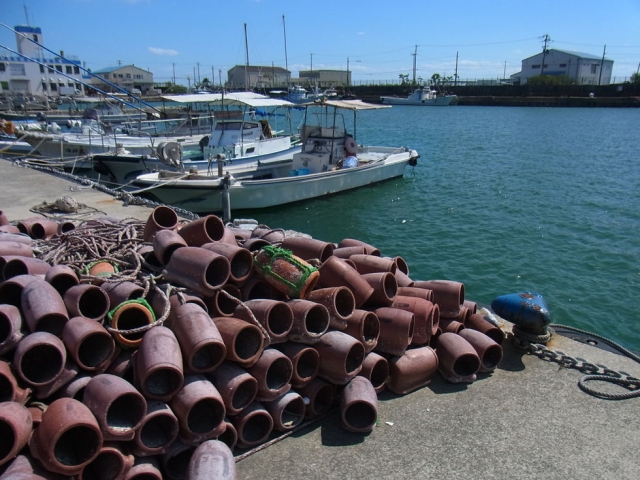
Tarumi is a place that still smells of the sea. The Tarumi Fish Market is a hive of activity where the morning’s catch is auctioned with a rhythmic, electric energy. The market is open for public viewing, and I highly encourage you to witness the “Seri” (auction) to see the true backbone of Kobe’s food culture.
The most famous local delicacy is Ikanago (sand lance). In early spring, the scent of “Ikanago no Kugini” (ginger-simmered sand lance) wafts through the streets of Tarumi as locals prepare this seasonal favourite. It is more than just food; it is a cultural marker that signals the end of winter. If you visit the market or the local seafood restaurants, you are tasting the freshest bounty of the Seto Inland Sea.
The Evolving Station Front: A Tale of Two Cities
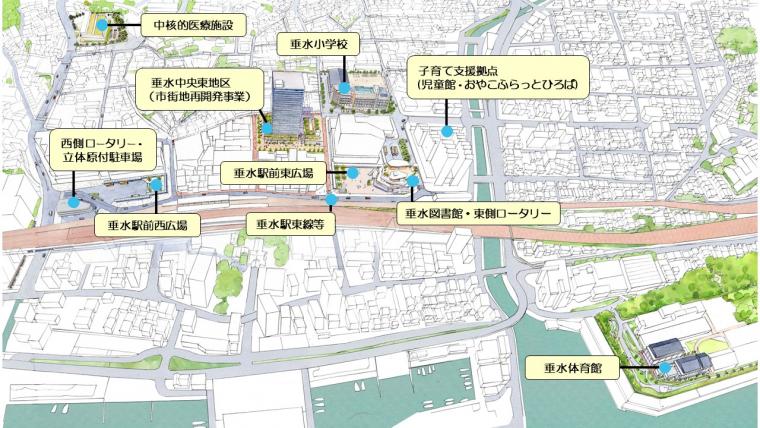
The area surrounding Tarumi Station (served by both JR and Sanyo Railways) is currently the poster child for the “Renovation Kobe” initiative. It is a fascinating place where the old and new collide.
On one hand, you have the Tarumi Shopping Arcade—a nostalgic, covered street filled with traditional grocers, fishmongers, and local boutiques. It has a “Showa-era” warmth that makes you feel instantly at home.
On the other hand, the station front is being transformed by massive redevelopment. This includes the construction of the only new high-rise “Tower Mansion” currently being built in Kobe, alongside a sleek new commercial wing and a beautiful, modern public library. This coexistence of a bustling, traditional marketplace and high-end modern residential living is making Tarumi one of the most desirable and talked-about neighbourhoods for the next generation of Kobe residents.
Conclusion: The Horizon Awaits
Tarumi-ku is a ward of vast horizons. It teaches us that “progress” doesn’t have to mean forgetting the past. Whether it is a 1,600-year-old tomb, a bridge that grew during an earthquake, or a fish market that has fed the city for generations, Tarumi embraces its scale with grace. It is the perfect western gateway to our city—a place where you can look out over the strait and feel the immense power of both nature and human ambition.