- The Vision of 2029: Project Specifications
- The 1981 Legacy: A City in Leap
- The Void and the Witness: A Transition of Eras
- The Subterranean Labyrinth: The Hidden Engineering Battle
- The Three-Layer Network: Elevating the “Human Deck”
- Analysis: Height Restrictions and Urban Competitiveness
- The “Surface” Strategy: Beyond the Single Anchor
- Conclusion: The Patience of a Resilient City
The Vision of 2029: Project Specifications
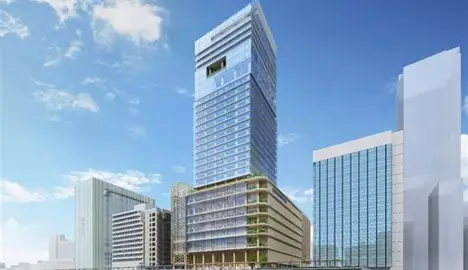
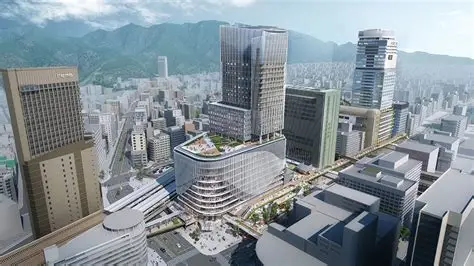
The transformation of JR Sannomiya Station is the most significant urban intervention in Kobe’s modern history. This project, a monumental collaboration between JR West, the Urban Renaissance Agency (UR), and Kobe city is designed to serve as the definitive “Main Gate” of the city. As we look toward the 2029 fiscal year, the sheer scale of the new station building is set to redefine the skyline and the economic pulse of the centre.
The Vertical Ecosystem: Floor-by-Floor Breakdown The 32-storey structure (reaching approximately 155 metres) is architecturally divided into distinct functional zones, ensuring that the building remains active 24 hours a day:
- Basement 1 to 10th Floor (Commercial & Retail): This expansive podium will house a variety of retail experiences. While the specific tenants remain under wraps, the focus is on creating a “curated urban journey” that complements the existing Chikagai (underground malls). Also, these areas functions as transportation’s hub make people more easy to change the train line or get around the area of station through the underground street and pedestrian deck.
- 12th to 17th Floor (Office Space): High-spec office floors designed to meet global business standards.
- 18th to 29th Floor (Luxury Hospitality): A high-end hotel with approximately 250 rooms, positioned to attract the international elite.
- 30th Floor (Signature Dining): An upscale restaurant floor offering 360-degree views of the Rokko Mountains and the Port of Kobe.
The 1981 Legacy: A City in Leap
To truly grasp the weight of the 2029 project, one must understand the year 1981. This was the year Kobe proved its mettle to the world through the Portopia ’81 International Exposition. It was an era defined by a “leap” in both technology and spirit. Kobe introduced the world’s first automated guideway transit system, the Port Liner, and simultaneously opened the original Sannomiya Terminal Building.
This era of growth is woven into the personal histories of Kobe’s residents. I remember my father recounting his visit to the expo; amidst the excitement of riding the futuristic Port Liner, he actually lost his ticket in the crowd and faced a stern scolding from his parents. This small, human anecdote reflects the overwhelming energy of that time—a period when everything in Kobe felt new, fast, and full of possibility. The terminal building was the flagship of that ambition, housing the beloved OPA and serving as the city’s vibrant heart for nearly four decades.
The Void and the Witness: A Transition of Eras
The decision to dismantle the 1981 terminal building was a pragmatic one, driven by the need for enhanced seismic resilience and a desire for “growth investment.” However, the physical process of this transition was striking. As the old building was slowly hollowed out, the once-bright passages leading to OPA grew dark and silent, creating a haunting atmosphere at the station’s edge.
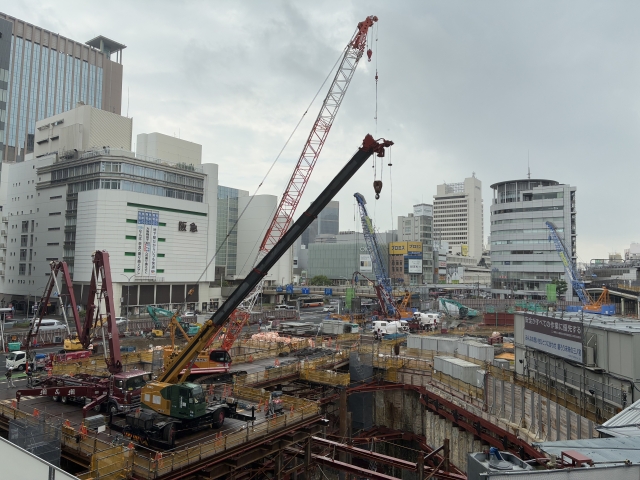
During the peak of the demolition, a remarkable visual contrast emerged. While the JR site was being reduced to a massive “void” in the station front, the new Kobe Sannomiya Hankyu Building directly across the street was rising with incredible speed. Standing on the pavement, watching the giant tower cranes of both sites engage in a silent “ballet” of destruction and creation, I felt as though I was witnessing the literal turning of a page in history. The 1981 era was ending, and the 2020s era was being forged right before our eyes.
The Subterranean Labyrinth: The Hidden Engineering Battle
While the skyscraper will eventually command the skyline, the real battle is currently being fought underground. The station area is a dense thicket of subterranean infrastructure, including multiple subway lines, the Port Liner foundations, and sprawling underground shopping malls. Constructing a 155-metre tower on top of this live “labyrinth” is an engineering feat of immense difficulty—a “nan-kouji” in every sense of the word.
Passersby often stop to stare at the massive steel plates and heavy machinery that have occupied the station front for years. From the surface, it may look like slow progress, but the complexity of reinforcing the earth while maintaining the flow of thousands of commuters daily is staggering. This subterranean stage is where Kobe’s resilience is once again being tested. The time being spent now is a necessary investment in the safety and longevity of the city’s heart.
The Three-Layer Network: Elevating the “Human Deck”
A core tactical element of this project is the integration into the “Three-Layer Network.” This urban design philosophy aims to separate vehicle traffic from pedestrian flow by creating a multi-level city. The second-floor “Human Deck,” covering approximately 2,500 square metres, will connect the new station building directly to the Sannomiya Twin Gate and the surrounding commercial blocks.
This is the birth of the “Eki-Machi” (Station-Town) space. The goal is to move beyond the station as a mere transit node and transform it into a destination where people linger. By lifting the “walkable city” experience into the air, Kobe is creating a stage for modern urbanity that is both efficient and elegant. However, we must be mindful of the visual impact; such large-scale structures will fundamentally change the street-level atmosphere, creating a multi-layered urban fabric that we could previously only imagine.
Analysis: Height Restrictions and Urban Competitiveness
The final height of the building has settled at approximately 160 metres, but the path to this figure was paved with debates over “scenic regulations.” From my perspective, these regulations can often become a shackle on a city’s growth. The common critique that high-rise buildings destroy the “Kobe view” ignores the fact that high-rises are already an integral part of our city’s identity. The true beauty of Kobe lies in the density of its urban core framed by the grandeur of the mountains and the sea.
In the global race for urban competitiveness, we must concentrate administrative and business functions in the city centre. While the inclusion of a luxury hotel is a significant win for our tourism profile, I personally believe the office floors should have been expanded even further. To truly elevate Kobe’s “earning power,” we need to attract headquarters from outside the prefecture. We should not fear the sky; we should fear the stagnation that comes from being too timid to build a business hub that rivals Tokyo or Osaka.
The “Surface” Strategy: Beyond the Single Anchor
The JR Sannomiya New Station Building is an “anchor,” but a city is not a single point; it is a “surface.” The success of this 2029 project is virtually guaranteed given its location, much like the successful redevelopments of the “Lucua” in Osaka or the new Hiroshima station building. The real challenge, however, lies in how the rest of the city responds.
As the gravity of the station area increases, historic districts like the Sannomiya Center-gai and Motomachi face a crossroads. They must not merely compete with the new station but complement it. If the station becomes the only destination, the surrounding city will wither. This is why the future redevelopments of Center Plaza and the surrounding blocks must be handled with urgency and tactical precision. We need to ensure that the energy generated at the JR gates flows seamlessly into the traditional shopping arcades, creating a unified, thriving urban landscape.
Conclusion: The Patience of a Resilient City
For years, we have endured the construction fences and the “blank space” at the heart of our city. While the wait has been long—sometimes frustratingly so—the progress we see today is a testament to Kobe’s enduring will to rebuild and evolve. The 2029 horizon is approaching, and when the 160-metre beacon is finally lit, it will be more than just a building; it will be the culmination of a decade of strategic patience and a tribute to the “leap” that began in 1981.
Growth requires endurance. As the subterranean labyrinth is mastered and the steel frame begins its final ascent, we must keep our eyes on the target: a Kobe that is as economically powerful as it is visually stunning. The anchor is set. Now, it is time for the city to rise.