Is Kobe Losing Its Influence?
Recently, Japanese media has been full of negative headlines about Kobe. You might see reports saying, “Kobe’s population is dropping,” or “The city is losing its competitive edge.”
As someone who has lived in Kobe for 20 years, I find these headlines a bit shallow. When I read these news reports, I see a gap between the numbers and the reality of the streets. To understand the “Real Kobe,” we must look beyond simple statistics. We need to look at how the city is evolving. Is Kobe truly shrinking, or is it strategically changing its shape?
Kobe in the Context of Japan
First, let’s look at the facts. Despite the talk of decline, Kobe remains one of Japan’s most important cities.
Table 1: Japan’s Top Cities by Population (Estimate)
| Rank | City | Population (approx.) |
| 1 | Tokyo (23 Wards) | 9,700,000 |
| 2 | Yokohama | 3,770,000 |
| 3 | Osaka | 2,750,000 |
| 4 | Nagoya | 2,320,000 |
| 5 | Sapporo | 1,970,000 |
| 6 | Fukuoka | 1,610,000 |
| 7 | Kobe | 1,500,000 |
: Major Cities by GDP Influence (Note: Kobe consistently ranks within the top 10 in terms of municipal GDP, driven by its port, medical clusters, and manufacturing.)
Even at number seven, Kobe is a powerhouse. Its economy is driven by a world-class port, advanced medical clusters, and high-tech manufacturing.
However, we must face the truth: Japan is facing a national population crisis. Except for a few hubs like Tokyo, Osaka or Fukuoka, almost every city is losing people. Kobe is not a special failure; it is simply a reflection of a “National Task” that all of Japan must solve.
The Reality of the Districts: Centre vs. Suburbs
The media often says, “Kobe is losing people,” but they don’t tell you where. As a local, I know that the city is not shrinking evenly.
Kobe is divided by the Rokko Mountains. The significant decrease is happening in Kita-ku (North) and Nishi-ku (West). These areas were developed decades ago as “New Towns” for families. Now, those families have grown old. This is a “Natural Decrease”—meaning there are more deaths than births. When I visit these areas, I see the quiet green streets and the slow pace of life, which is very different from the city centre.
In contrast, Chuo-ku (the Central Ward) is actually growing. This is what we call a “Social Increase.” Young professionals and students are moving into the heart of the city. They want to be close to work, the harbour, and the vibrant energy of Sannomiya. This tells me that the “Urban Core” of Kobe is still very attractive. People aren’t leaving Kobe because they hate it; they are simply moving closer to the centre.
Urban Planning: The Mayor’s Vision
Kobe is not just waiting for the population to drop. The city government, led by Mayor Hisamoto, is taking a very “tactical” approach. They are moving towards a “Compact City” model.
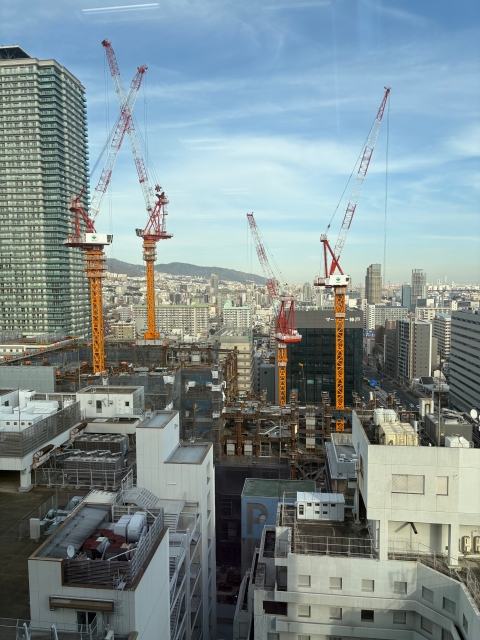
Rather than trying to make the city spread out further, they are concentrating everything into the centre. There are massive redevelopment projects happening right now around Sannomiya Station. You can see the cranes and the changing skyline every day. The goal is to make the city centre a place where people can work, live, and play without needing a long commute.
They are also focusing on “Transit-Oriented Development.” This means making the areas around train stations more convenient and modern. By doing this, they hope to attract young families back to the suburbs by offering a better balance between nature and easy access to the city.
Revitalizing the “New Towns”
The decline in Kita-ku and Nishi-ku is being met with active measures. I remember talking to residents in these “New Towns” who felt the infrastructure was getting old. The city is now working to remodel these areas.
They are improving housing and adding new facilities to attract the younger generation. The idea is to create a sustainable community where you can enjoy the mountains and fresh air while still being a short train ride away from a high-rise office. It’s about “Sustainable Quality” rather than “Growth at all costs.”
A City Ready for the Future
Kobe is at a turning point. We are moving away from the old era of trying to be the “biggest” city. Instead, we are entering an era of being the “best” city to live in.
Kobe’s influence is not just about the number of people on a spreadsheet. It is about the quality of life. We offer something that Tokyo and Osaka cannot: a perfect mix of urban function and raw nature. By integrating the sea and the mountains with a modern city centre, Kobe is designing a blueprint for how Japanese cities can thrive in the future.
This is why I remain optimistic. When I walk through the streets of Sannomiya or look out at the busy port, I don’t see a city in decline. I see a city that is bravely redesigning itself for the next generation.