In the complex tapestry of Japanese railways, the Kobe Kosoku Line (Kobe Rapid Transit Railway) stands as a phantom. It is a railway company that owns tracks and stations but operates not a single train of its own. For the uninitiated traveller, it is a riddle; for the local, it is an invisible necessity. To understand this line is to understand the very DNA of Kobe’s urban evolution.
- The “Invisible” Commute: A Silent Handover
- The Westward Shift: A City’s Heart in Motion
- The Surreal Terminal: When Four Worlds Collide
- The “Showa” Labyrinth: A Walk Through Time
- The Local’s Gripe: The “Hidden” Toll Gate
- A Strategic Powerhouse: Arima, Himeji, and the Two Umedas
- Conclusion: The Node That Holds Us Together
The “Invisible” Commute: A Silent Handover
One of the most curious aspects of this line is its lack of identity in daily speech. As a local, I never find myself saying, “I’m taking the Kobe Kosoku Line.” Such a phrase simply doesn’t exist in our vernacular.
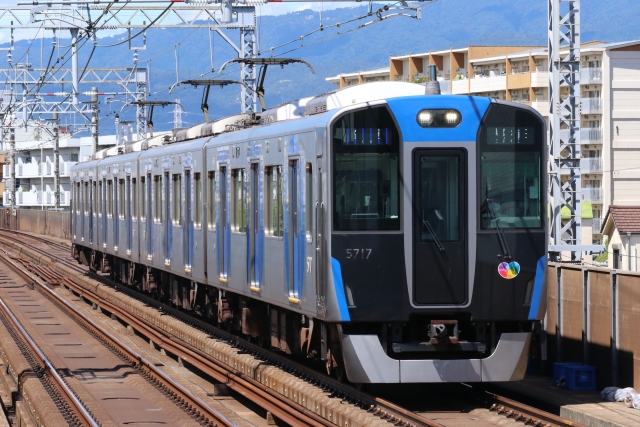
Instead, the experience is one of a “silent handover.” You board a Hanshin or Hankyu train from Osaka, Kobe or wherever, and as you hurtle westward, you cross an invisible threshold. Without a single announcement or a change of seats, you have entered Kobe Kosoku territory. You only realise you were on it once you’ve already left it. It is a seamless, almost ghostly transition that links the disparate private rail empires into a single, functional network.
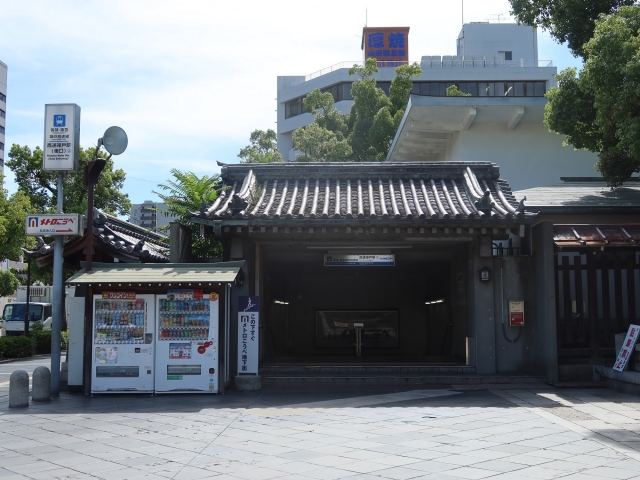
The Westward Shift: A City’s Heart in Motion
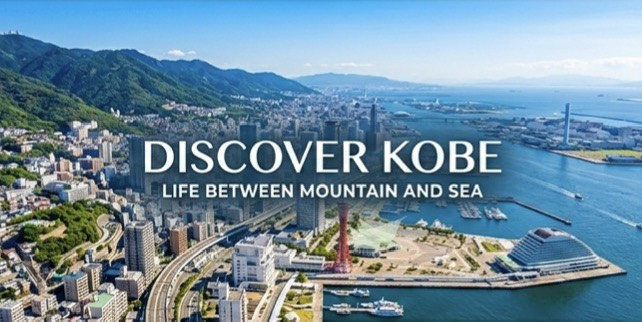
The geography of the Kobe Kosoku Line tells a story of a city whose centre has migrated. The fact that the line’s major hubs—Shinkaichi and Kosoku Kobe—lie to the west of Sannomiya is a historical scar.
It reminds me that Kobe’s “gravity” was once rooted in the west. Shinkaichi was once the glittering “theatre district,” the undisputed soul of the city’s entertainment. Seeing these massive, multi-line terminals situated there today feels like looking at a grand monument to a former capital. While the economic and commercial heart has long since shifted east toward the glitz of Sannomiya, the sheer scale of the infrastructure at Shinkaichi suggests a time when the west was where the world arrived.
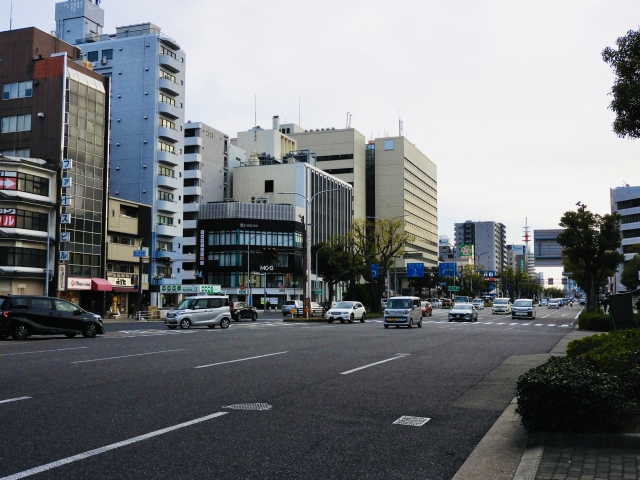
The Surreal Terminal: When Four Worlds Collide
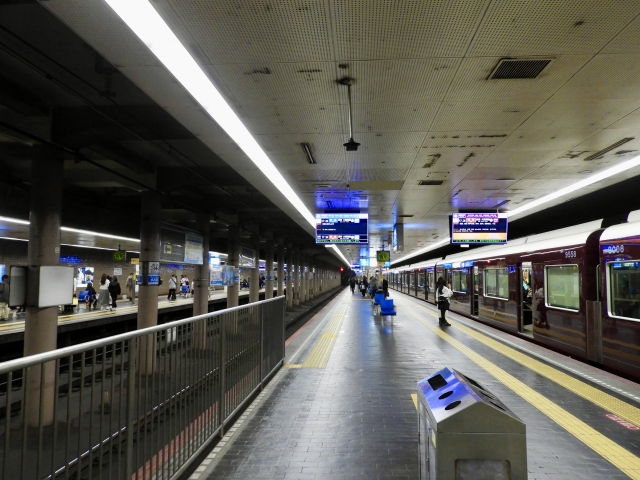
The true magic of this line reveals itself in the darkness of the underground platforms. I remember the first time I used Kosoku Kobe Station after taking a Hanshin train from Sannomiya. I stepped off the orange-accented Hanshin carriage, only to look across the platform and see the iconic maroon of a Hankyu train sitting quietly just a few feet away.
It was a surreal, almost impossible sight—two fierce rivals sharing the same air.
At Shinkaichi, this “Railway United Nations” goes even further. Within this single underground cavern, four distinct companies converge: Sanyo, Shintetsu (Kobe Electric Railway), Hankyu, and Hanshin. Ironically, despite Sannomiya’s overwhelming victory in terms of passenger numbers, Shinkaichi feels like much more of a “True Terminal.” In Sannomiya, the stations are fragmented, separated by roads and shopping malls. In Shinkaichi, the entire network is compressed into one subterranean space. It is a masterclass in civil organisation, even if the world above has grown quieter over the decades.
The “Showa” Labyrinth: A Walk Through Time
Walking through the vast underground tunnels of Metro Kobe and Duo Kobe that connect these stations is like stepping into a time capsule. The atmosphere is thick with the scent of the Showa Era (1926–1989)—for better or for worse.
Unlike the polished, sterile perfection of modern Sannomiya, these tunnels have “grit.” It is a nostalgic, slightly messy, yet deeply authentic side of Kobe. It isn’t trying to be “chic”; it is simply surviving, serving the locals who have walked these tiles for half a century.
The Local’s Gripe: The “Hidden” Toll Gate
Of course, affection for the line is often tempered by a very practical frustration. If you listen to Kobe locals, you will eventually hear them grumble about the Kobe Kosoku fare surcharge. Because this segment is technically owned by a separate company, an additional fee is tacked onto your journey. Even though you haven’t physically changed trains or passed through a new gate, your fare suddenly jumps. I completely understand this frustration. It feels like paying a toll for a bridge you didn’t know you were crossing. It is the price we pay for the convenience of a unified network, but it remains a point of contention for every budget-conscious commuter.
A Strategic Powerhouse: Arima, Himeji, and the Two Umedas
When you step back and look at the map, the sheer connectivity provided by this “invisible” line is staggering. Even if we ignore the JR network, the Kobe Kosoku Line allows you to access:
- The Hot Springs of Arima via the Shintetsu link.
- The White Heron Castle of Himeji via the Sanyo link.
- The Commercial Might of Osaka via the Hankyu and Hanshin links.
A word of warning for those heading to Osaka: because both Hankyu and Hanshin trains depart from these platforms for Osaka-Umeda, you must be vigilant. While they share a destination name, they follow entirely different paths. If your goal is an intermediate stop like Koshien or Rokko, boarding the wrong “Umeda” train will leave you miles from your destination. It is a uniquely Kobe-style trap for the unwary!
Conclusion: The Node That Holds Us Together
The Kobe Kosoku Line is a testament to the power of the “Node.” It is the invisible glue that prevented Kobe’s railway system from being a fractured mess of dead-end terminals. It might be retro, it might be slightly more expensive, and it might be confusing to define—but without this subterranean labyrinth, Kobe would not be the accessible, interconnected city it is today. It remains a fascinating reminder that sometimes, the most important part of a journey is the part you never even notice.