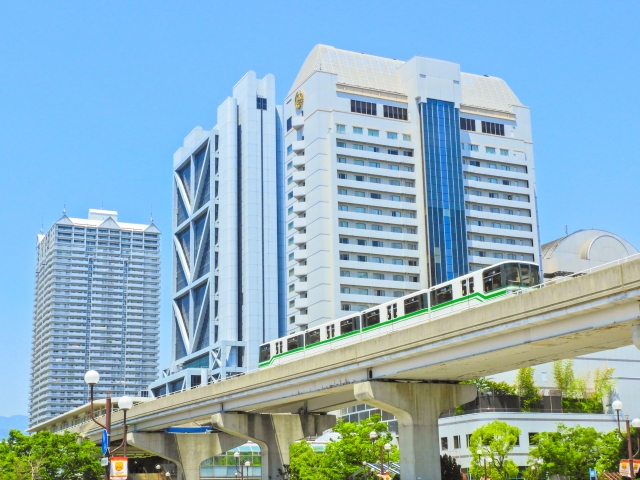
In the early 1980s, the world looked at Kobe with astonishment. The city had just unveiled the Port Liner, the world’s first fully automated, driverless transit system (AGT). Designed to connect the mainland with the ambitious artificial island of Port Island for the “Portopia ’81” exposition, it became a symbol of Kobe’s forward-thinking urban engineering. Today, it remains a vital, albeit crowded, lifeline that bridges the gap between the city centre, a cutting-edge medical cluster, and an expanding international airport.
The Captain’s View: A Childhood Dream in the Front Seat
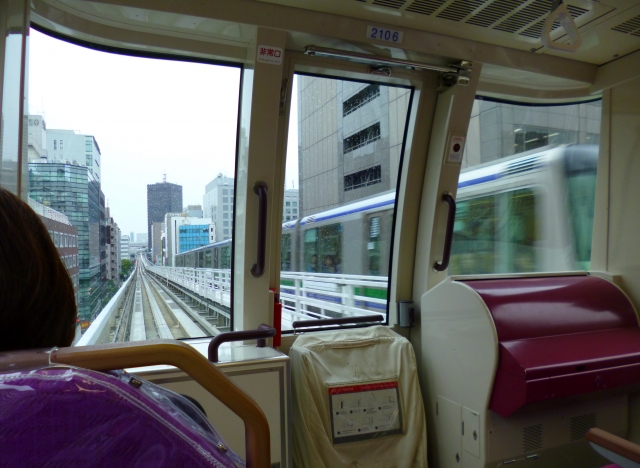
The most defining characteristic of the Port Liner is the absence of a driver’s cab. This design choice transforms the very front of the train into a panoramic observation deck. Even for those of us who have lived in Kobe for years, there is an undeniable, almost childlike excitement in securing the front-row seat.
Whenever I find the front seat vacant—and crucially, when there are no children around who might enjoy the “driver’s perspective” more—I cannot resist taking that spot. From here, you aren’t just a passenger; you are the pilot of a futuristic vessel gliding through the sky. It offers a sense of immersion that no other railway in the city can match, providing a literal front-row seat to Kobe’s evolving skyline.
The Capacity Crisis: A Victim of Its Own Success
Despite its futuristic charm, the Port Liner is currently grappling with a very earthly problem: extreme overcrowding. The line has become a victim of its own success. During the morning and evening peaks, the Sannomiya terminal often sees queues so long that passengers must wait for next train to pass before they can board.
While the frequency of service is high, the 6-car trains are reaching their absolute physical limit. I often think about how transformative an 8-car expansion or an extension to Shin-Kobe would be, but technical constraints and budget realities currently keep those dreams on the horizon.
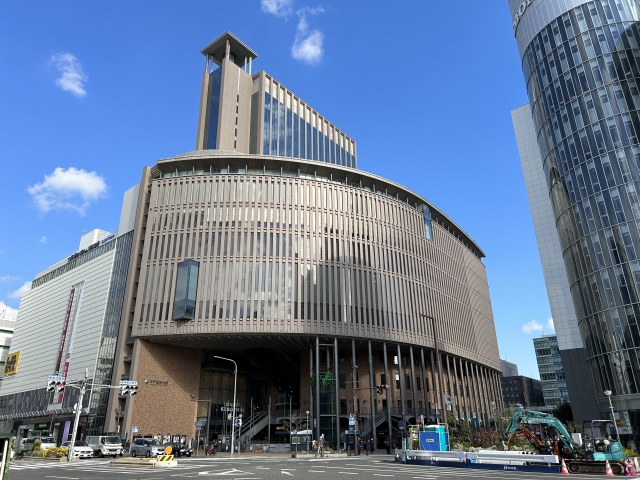
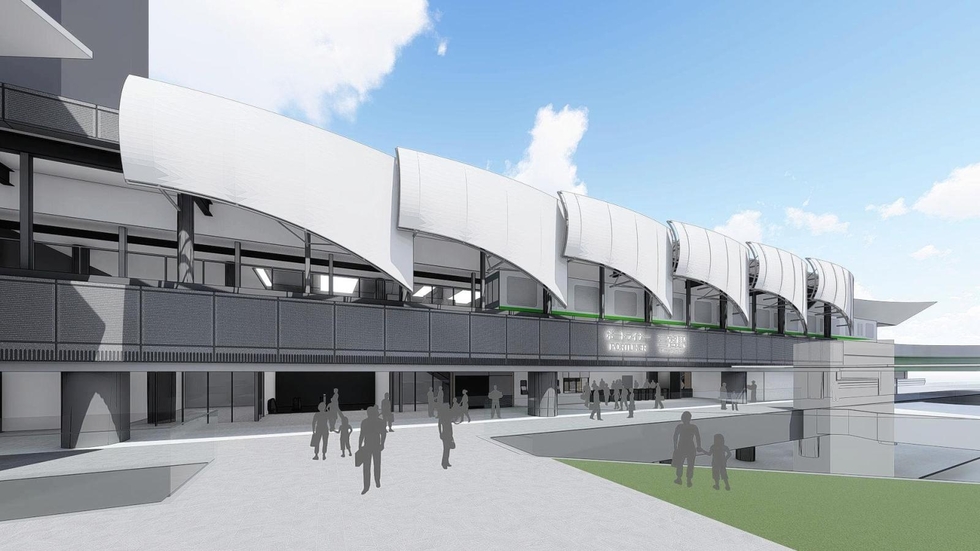
However, there is a silver lining. In tandem with the massive redevelopment of the JR Sannomiya station area, the Port Liner’s Sannomiya terminal is undergoing its own renovation and beautification. As the station has begun to show its age, this modernisation is a welcome change. It ensures the Port Liner remains in step with the sophisticated “New Sannomiya” that is rising around it, offering a more comfortable environment for airport travellers with heavy luggage and daily commuters alike.
Debunking the Myth: The Vibrant “Medical City”
If you browse through sensationalist videos on social media, you might encounter the misleading narrative that Port Island is becoming a “ghost town” due to an ageing population or vacant commercial spaces. To anyone who actually uses the Port Liner daily, this couldn’t be further from the truth.
The crowds at the station are proof of life. Port Island is home to the Kobe Biomedical Innovation Cluster (KBIC), one of Japan’s largest medical research hubs, and numerous university campuses. The trains are constantly packed with researchers, medical professionals, and a vibrant student population. Far from being a relic of the past, the island is a growing engine of Japanese science. Every time I see the flood of students and young professionals boarding at Shimin-Hiroba or Iryo-Centre, it reaffirms that the Port Liner is the essential pulse of a living, breathing academic and industrial ecosystem.
The Airport Wing: A Gateway to the Globe
The extension of the line to Kobe Airport in 2006 was the turning point that cemented the Port Liner’s strategic importance. Initially met with some scepticism regarding demand, the airport has proven its worth.
With the recent opening of international flight slots, the Port Liner is set to become the first point of contact for an increasing number of foreign visitors. The sheer convenience of reaching an airport terminal in just 18 minutes from the heart of a major city is a luxury that few global cities can boast. For the traveller, the Port Liner isn’t just a train; it is the final leg of their journey home or the first chapter of their adventure in Japan.
The Scenic Symphony: From Urban Canyons to Harbor Lights
Visually, the Port Liner is a masterpiece of urban exploration. The segment near Sannomiya is particularly dynamic; the track weaves through the “canyons” of skyscrapers, offering a dizzying, close-up view of the city’s vertical architecture. I often find myself looking around in awe, probably looking like a tourist myself, but the perspective is simply too exhilarating to ignore.
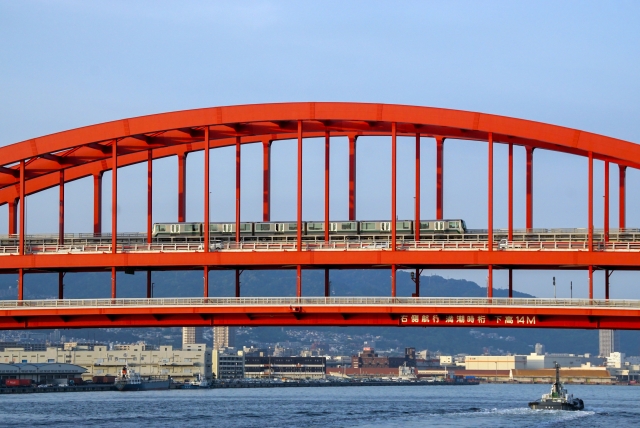
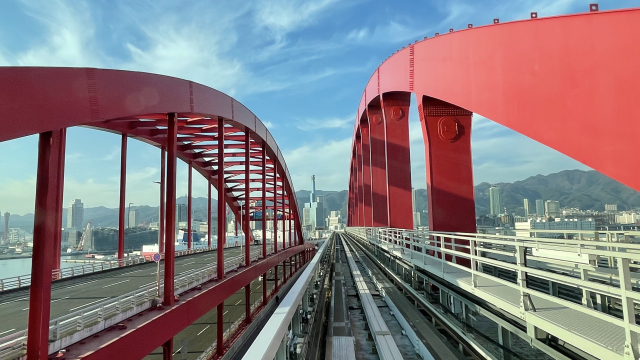
The true highlight, however, occurs when the train leaves the mainland and crosses the Kobe Ohashi (the Great Red Bridge).
- By Day: You are treated to a sweeping panorama of the port, the white sails of the Maritime Museum, and the majestic green backdrop of the Rokko Mountains.
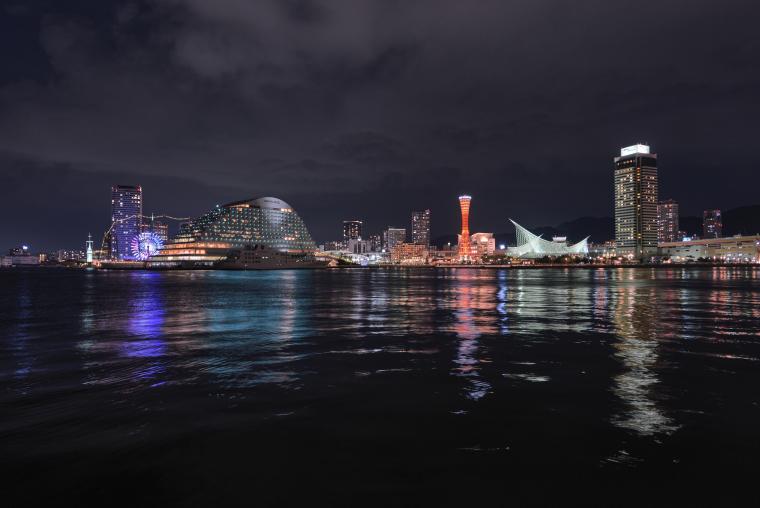
- By Night: The view transforms into a “10-million dollar” tapestry of lights.
I remember returning from a long day of work on Port Island, exhausted and drained. As the train crossed the bridge toward Sannomiya, the sparkling lights of Harborland stretched out across the dark water. It was a moment of pure healing. The city occasionally acknowledges this scenic value by running special “Sightseeing Event Trains,” which travel at a slower pace and feature music, allowing passengers to savour the view. But even on a regular weekday night, the Port Liner offers a world-class visual experience for the price of a standard fare.
Conclusion: Kobe’s Pathward Vision
The Port Liner is a testament to Kobe’s resilience and ambition. It was the first of its kind in the world, and it remains at the cutting edge of the city’s transport strategy. Despite the challenges of congestion, it continues to evolve alongside the “Renovation Kobe” project. Whether you are a student heading to a lecture, a scientist going to a lab, or a traveller catching a flight, the Port Liner provides a unique, elevated perspective of a city that is always looking toward the horizon.