In the world of urban transit, there are few lines as sophisticated and socially conscious as the Rokko Liner. While its older sibling, the Port Liner, was built to showcase the future of industry and medicine, the Rokko Liner (opened in 1990) was designed with a more delicate touch. It is an automated, rubber-tyred metro that serves as a vital bridge between the historic mainland and the international, art-filled sanctuary of Rokko Island.
- The Seamless Connector: Linking the Two Giants
- The Magic of the “Fogging” Windows: Tech as a Peacekeeper
- Rokko Island: A Multi-Functional International Oasis
- An Aerial Panorama: From Sake Breweries to the Deep Blue
- A Destination for Joy: Summer Vibes and Future Growth
- Conclusion: The Quiet Sophistication
The Seamless Connector: Linking the Two Giants
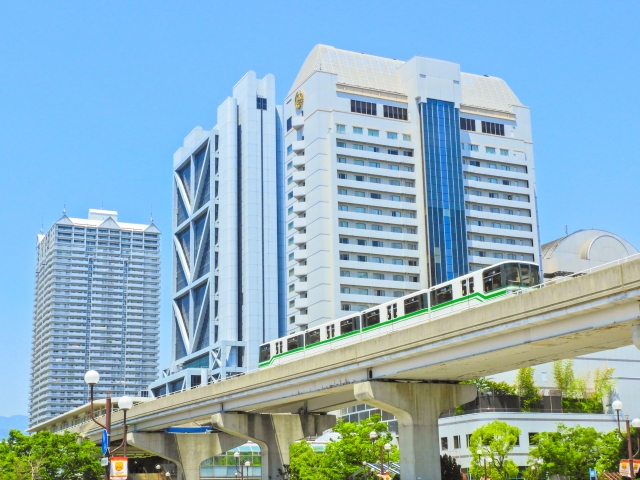
Rokko Liner is connecting Sumiyoshi to Marin Park, covering Kobe’s east side city centre and second airtificial island Rokko island, with a same system as Port Liner opend bit earlier.
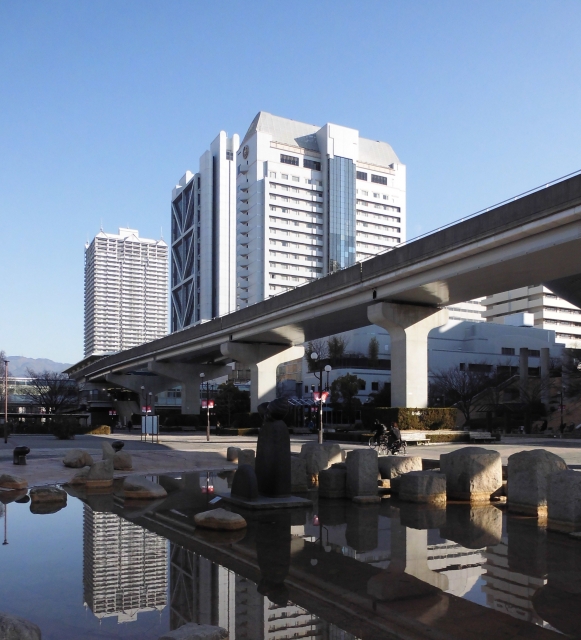
The brilliance of the Rokko Liner begins with its accessibility. It serves as a crucial north-south “zipper” for Kobe’s two main east-west arteries.
- JR Sumiyoshi Station: The northern terminus, perfectly integrated into the “Liv” shopping mall.
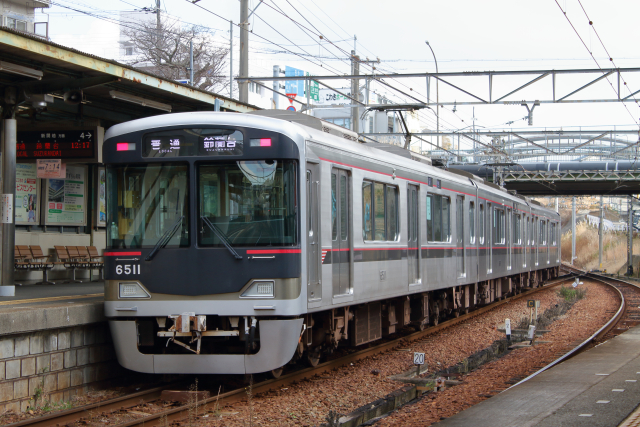
- Hanshin Uozaki Station: A key interchange point located just a few minutes south.
What makes this line so effortless for the commuter is the pedestrian deck. At both Sumiyoshi and Uozaki, the transfers are entirely seamless. You never have to worry about crossing busy intersections or navigating stairs; you simply glide across the elevated walkways directly into the station gates. This level of refined organisation is what makes the Rokko Liner one of the most user-friendly segments of Kobe’s transport network.
The Magic of the “Fogging” Windows: Tech as a Peacekeeper
One of the most famous features of the Rokko Liner is a piece of technology that I find supremely cool. When the line was being constructed, residents living in the high-rise apartments directly adjacent to the tracks were naturally concerned about their privacy—nobody wants a trainload of commuters peering into their living room.
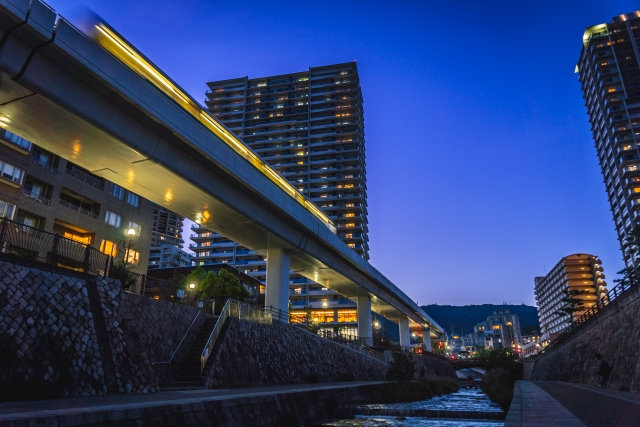
Rather than building unsightly walls or rerouting the tracks, Kobe’s engineers implemented a brilliant solution: Liquid Crystal “Fogging” Windows. As the train passes through residential zones, the glass instantly turns opaque, white-out-style, only to clear again seconds later as the train emerges into the open. Seeing this for the first time is a genuine “wow” moment. It is a perfect example of using high-end technology to solve a social friction—overcoming human opposition with pure innovation.
Rokko Island: A Multi-Functional International Oasis
Unlike many “bedroom communities,” Rokko Island is a true multi-functional city. The Rokko Liner carries an incredibly diverse demographic: students attending international schools, professionals working at corporate headquarters, and residents enjoying a quiet life by the sea.
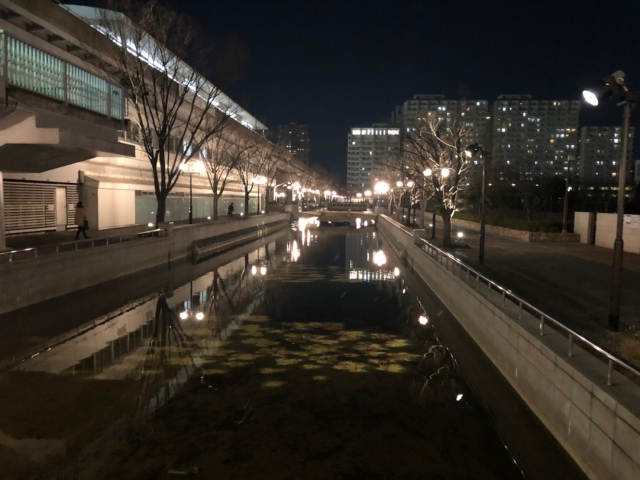
The heart of this experience is the River Mall, a stunning urban waterway that runs through the centre of the island. When you disembark at Island Center Station, you are met with a view that is undeniably grand. The architecture, the greenery, and the water create a sophisticated landscape that feels remarkably international. At night, the entire area is beautifully illuminated, transforming the island into a shimmering jewel in the middle of the bay. It is a testament to what a “planned city” can achieve when it prioritises aesthetics.
An Aerial Panorama: From Sake Breweries to the Deep Blue
Because the Rokko Liner runs on high-elevated tracks, the scenery is nothing short of spectacular. The journey offers three distinct “acts” of urban drama:
- The Urban Canyon (Sumiyoshi): Near the start of the line, the train ducks and weaves through the narrow gaps between modern skyscrapers. The sense of speed and verticality is thrilling.
- The Historic Heart (Minami-Uozaki): As you move south, the view shifts. Suddenly, you are looking down upon the tiled roofs of the Nada-Gogou sake breweries and traditional manufacturing plants. It is a rare chance to see Kobe’s historic industrial heritage from a “god’s eye” perspective.
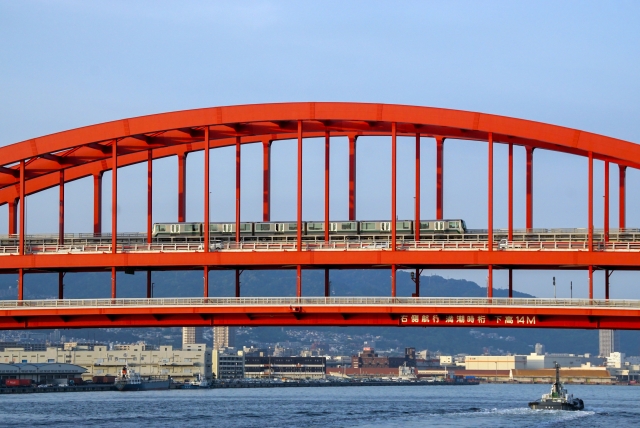
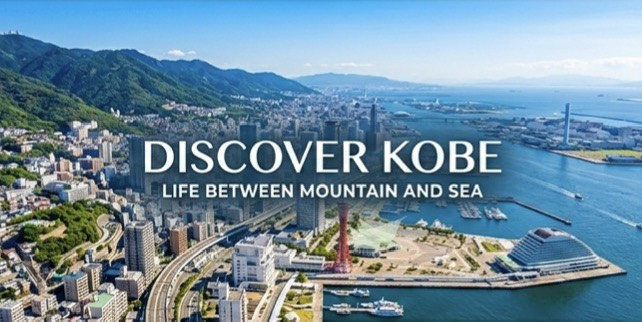
- The Maritime Release: Finally, as the train crosses the massive bridge to the island, the city opens up. The claustrophobia of the buildings vanishes, replaced by a staggering sense of liberation as the blue waters of the Osaka Bay and the vast skyline of the city appear in a panoramic sweep.
Every time I take this trip, I find myself looking around in excitement at each transition. If you see someone curiously peering out the window at the sake vats one moment and the ocean the next, it’s likely me!
A Destination for Joy: Summer Vibes and Future Growth
In the summer months, the atmosphere on the Rokko Liner changes as it becomes the primary route to Dekapatous, Kobe’s iconic water park. Seeing the carriages filled with families and excited children heading for the slides is a heart-warming sight—it’s a reminder that this line is a “vessel of joy” for the community.
The terminus at Marine Park is also undergoing a quiet revolution. With the addition of new fishing facilities and glamping (glamorous camping) sites, the southernmost tip of the island is becoming a weekend getaway for city dwellers. With further private investment on the horizon, I am optimistic that the area will continue to flourish. The Rokko Liner isn’t just a way to get to work; it’s a gateway to recreation and a different pace of life.
Conclusion: The Quiet Sophistication
The Rokko Liner may not have the fame of the Shinkansen or the sheer volume of the JR lines, but it represents the very best of Kobe’s urban philosophy. It is a line that values privacy, scenic beauty, and seamless connectivity. Whether it’s the “magic” windows or the breathtaking view of the bridge, the Rokko Liner proves that a daily commute can be an artistic and technological experience.