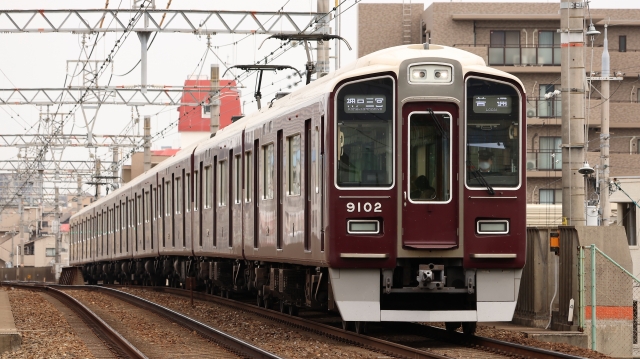
In the world of Japanese railways, few brands carry the same weight as Hankyu. With its signature “Maroon” carriages—a deep, polished chestnut that has remained unchanged for over a century—Hankyu is more than just a transit provider; it is a curator of lifestyle. Connecting the three great cities of Osaka, Kyoto, and Kobe, the Hankyu Kobe Line represents the pinnacle of suburban elegance and strategic urban planning.
A Pioneer of Urban Living: The “Railway + Housing” Strategy
Long before modern transit-oriented development became a global standard, Hankyu’s founder, Ichizo Kobayashi, pioneered a revolutionary business model: developing the railway and the surrounding residential land simultaneously. The Kobe Line is the crown jewel of this legacy.
Stretching from the heart of Osaka-Umeda to the slopes of Kobe, the line serves as a social barometer. In the afternoons, it is common to see students in smart uniforms or young children commuting to Juku (cram schools). This is a line favoured by education-conscious families and the professional class. The “Hankyu Brand” is inextricably linked with a quiet, studious, and sophisticated residential atmosphere that defines the northern foothills of Kobe.
Straight Lines and Suburban Status
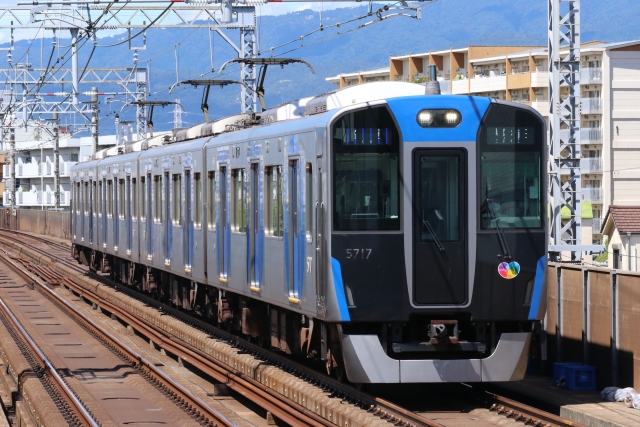
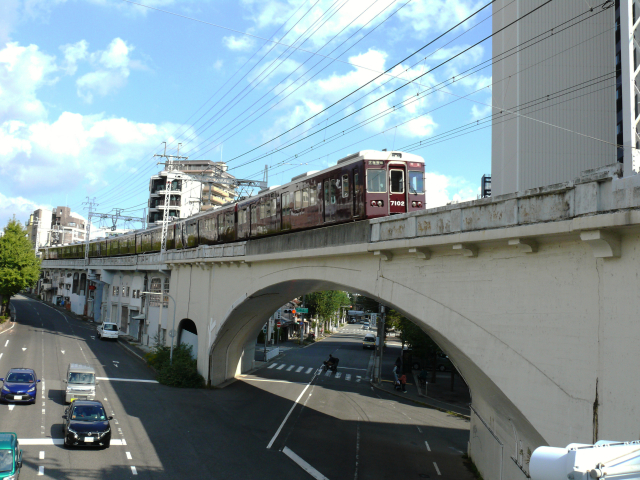
Geographically, the Hankyu Kobe Line runs parallel to the JR Kobe Line but takes the “high road” along the base of the Rokko Mountains. While JR focuses on raw speed and Hanshin serves the coastal industrial areas, Hankyu was engineered for a balance of efficiency and prestige.
The line is notable for its remarkably straight sections, allowing for high speeds that easily outpace the Hanshin Line. For the resident of the “Yamanote” (mountain side) districts like Okamoto, Mikage, or Rokko, the Hankyu train is a fast, reliable, and aesthetically pleasing extension of their own living rooms.
The Sannomiya Renaissance: A Beacon of Rebirth
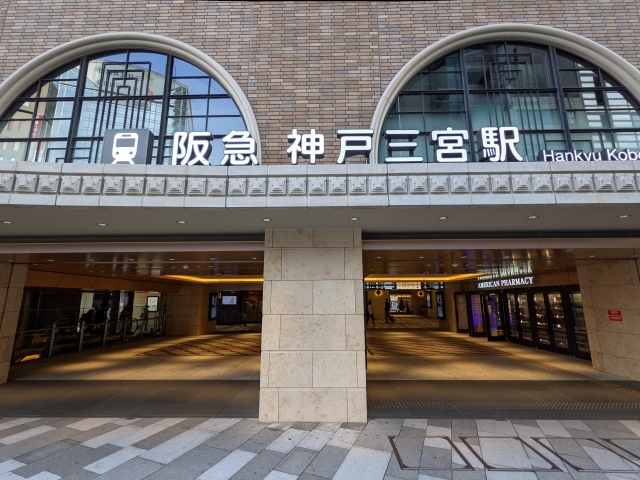
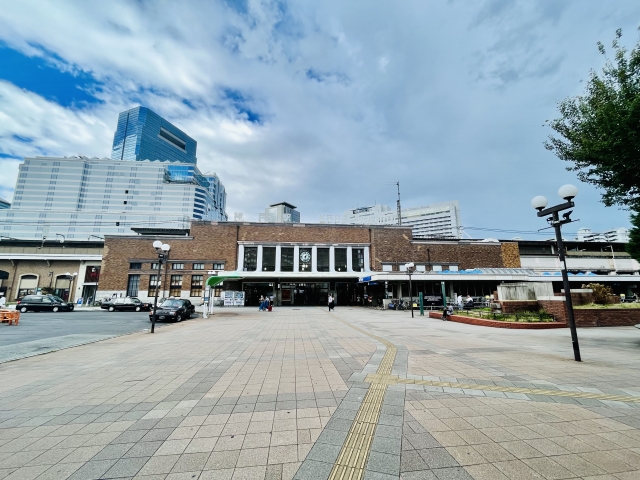
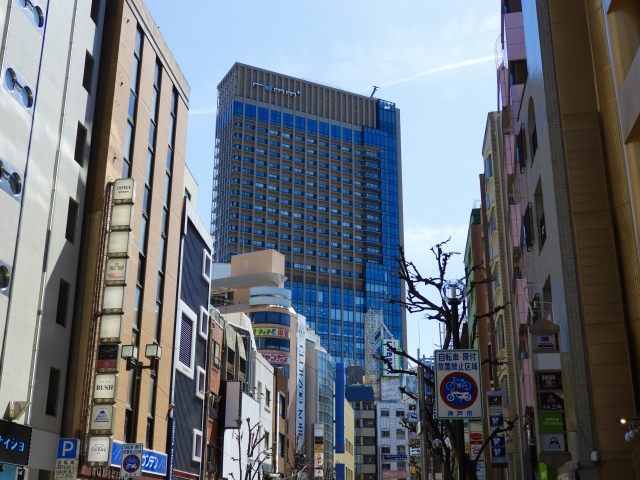
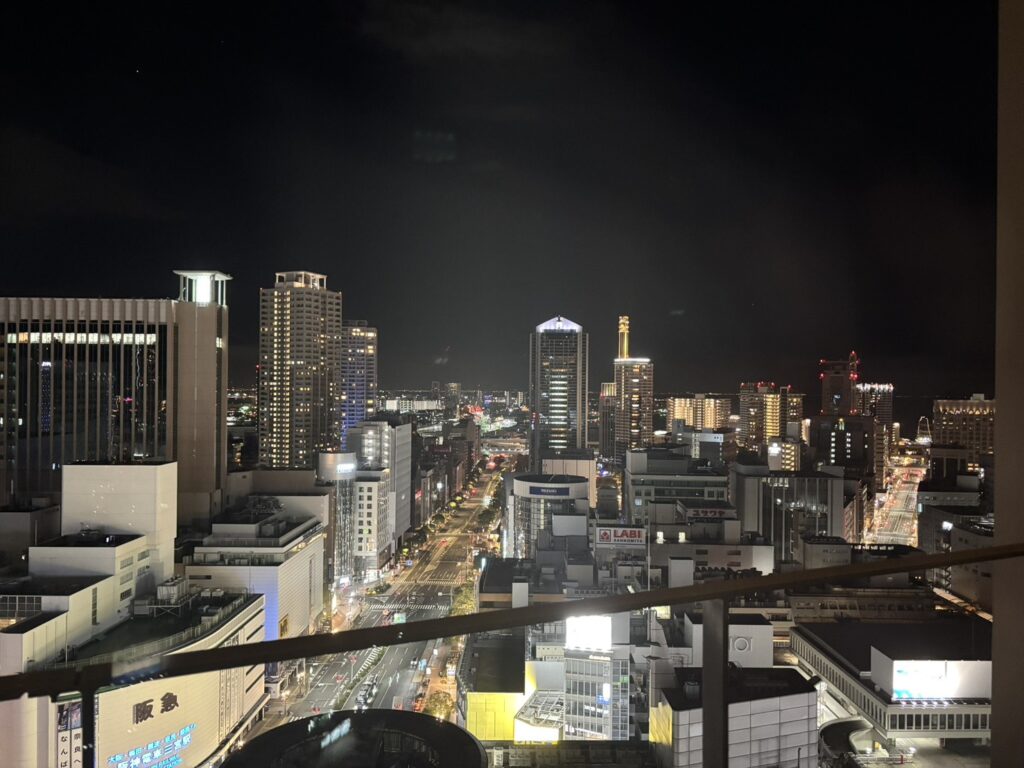
For years, the northern side of Kobe-Sannomiya Station was perceived as somewhat cluttered compared to the more open south. However, the 2021 completion of the Kobe Sannomiya Hankyu Building (EKIZO) changed the city’s skyline forever. This project was the pioneer of the wider “Redevelopment of Kobe” initiative, setting a new standard for architectural harmony.
While the original station building was lost to the 1995 earthquake, its modern “remake” is a triumph of design. The transition from the Subway Seishin-Yamate Line to the Hankyu platforms is now a sensory experience. I remember that immedeatly after the completion of this building, I found the elevators, bathed in warm, elegant lighting, so fascinating, offering a seamless vertical journey that feels more like entering a luxury hotel than a railway station.
Above the station, the Remm Plus Sannomiya hotel offers guests a “breakfast in the sky,” where one can admire the sweeping views of the city being rebuilt. I had a breakfast there and that was really brilliant, so I totally forgot that it is a business hotel, not luxuary one. It is a symbol of a city that has finally found the courage to merge its historic charm with futuristic ambition.
The Strategic Choice: Cost vs. Speed
While the JR “Special Rapid” is the king of speed, Hankyu is the master of strategic value. For the savvy commuter or the weekend traveller, the price difference is significant, especially when travelling toward Kyoto.
| Route (From Kobe-Sannomiya) | Hankyu Railway (Private) | JR West (Standard) |
| To Osaka (Umeda) | ¥330 | ¥420 |
| To Kyoto (Kawaramachi/St.) | ¥640 | ¥1,110 |
Choosing Hankyu to reach Kawaramachi (Kyoto) or Umeda (Osaka) is not just about saving yen; it is about choosing a more comfortable, climate-controlled, and aesthetically consistent journey. Whether you are heading to the historical heart of Kyoto or the department stores of Umeda, the Hankyu experience is defined by “relaxed efficiency.” Last time I use Hankyu Line was for Arashiyama(Kyoto). It was literaly great experience with comfort of seat and landscape from window. I higly recommend to you that you should try both line JR and Hankyu to go back and forth between Kyoto, Osaka and Kobe.
The Interchange Nexus: A Connected City
The Hankyu Kobe Line terminates officially at Shinkaichi, but its soul is at Sannomiya. The ease of transfer at these hubs allows Kobe’s residents to navigate the “Kobe Sandwich” (the parallel lines of JR, Hankyu, and Hanshin) with expert precision. Depending on the destination—be it a specific shop in Nishinomiya or a museum in Nada—locals switch between lines as easily as changing lanes on a motorway.
As Kobe continues its transformation, the Hankyu Kobe Line remains the steady, maroon heartbeat of the city—a reminder that in the rush toward the future, there is always room for a little elegance.