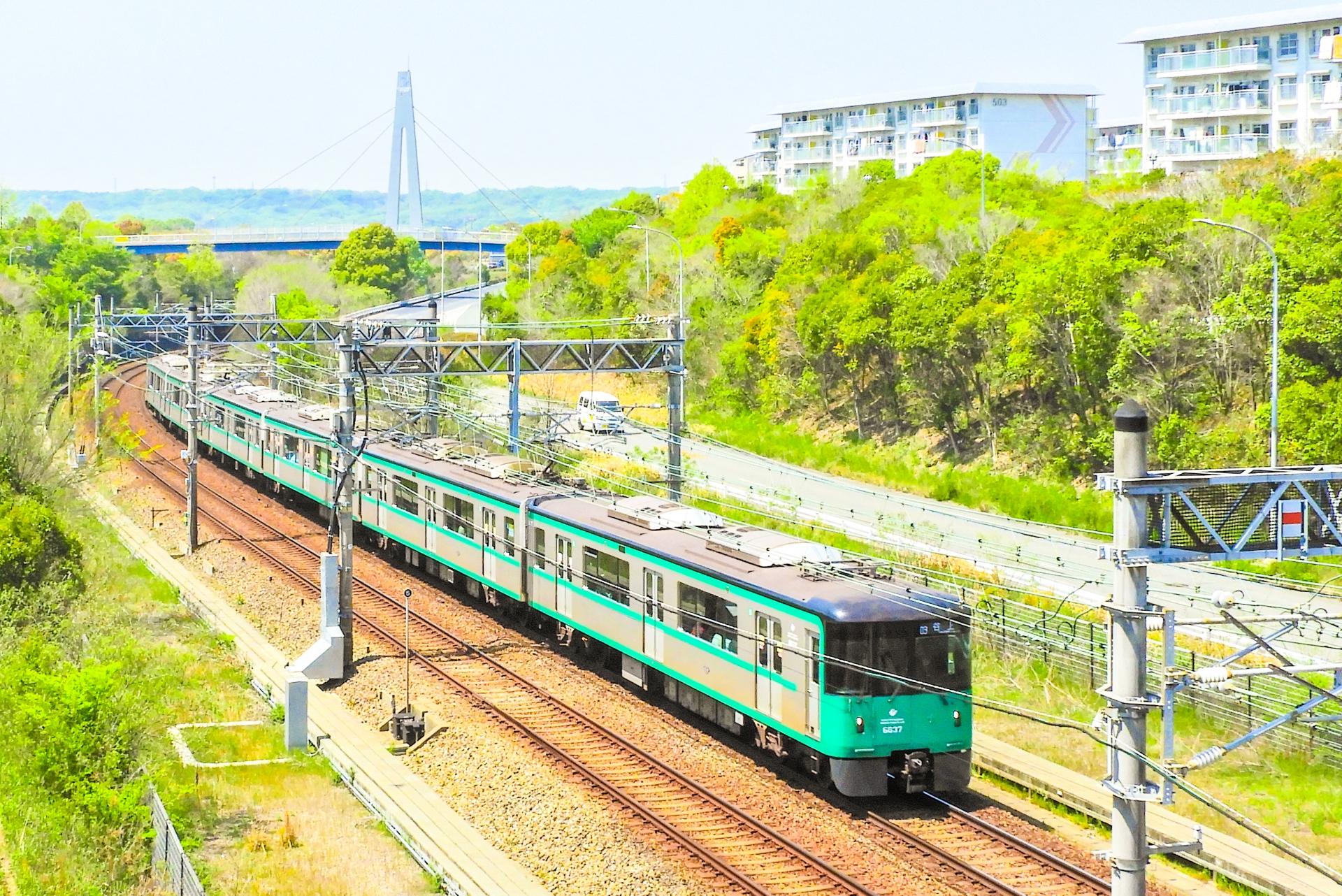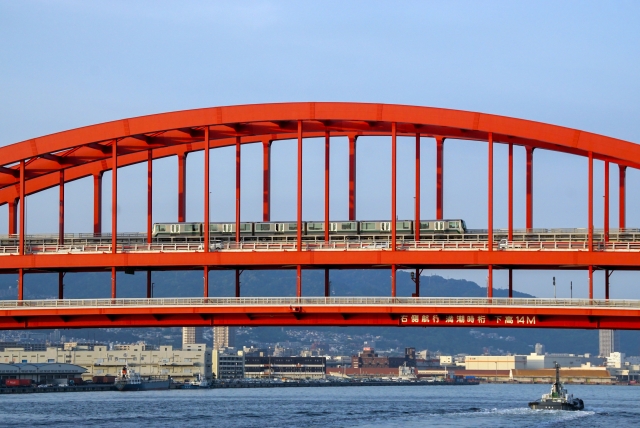
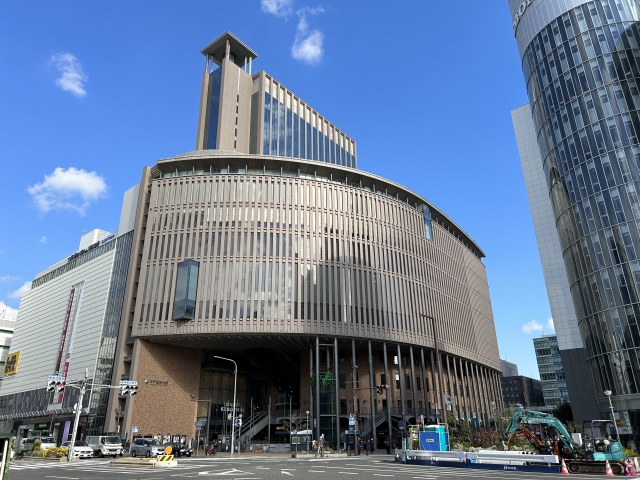
If the Seishin-Yamate Line is the prosperous green artery of Kobe, then the Kaigan Line (Coast Line) is its plucky, somewhat misunderstood blue younger brother. Opened in 2001, this line was born into a difficult era—the city was still reeling from the aftermath of the 1995 earthquake, and competition with the mighty JR Kobe Line was fierce from the start. Today, it remains in the red, financially supported by the success of its elder “Green” sibling. Yet, for those who look closer, the Kaigan Line offers a uniquely intimate and strategic view of Kobe’s soul.
The “Piccadilly” of Kobe: A Study in Scale
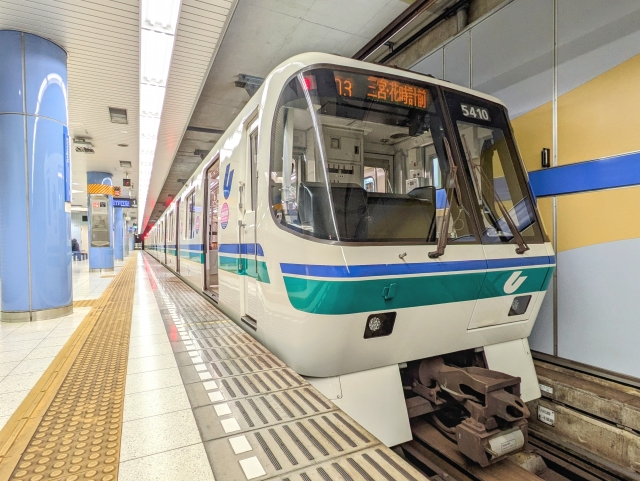
The first thing one notices about the Kaigan Line is its stature. Using linear motor technology, the trains are notably smaller than standard Japanese carriages. To a seasoned traveller, they possess a distinct charm. As the Editor-in-Chief aptly noted, the size and the subterranean “cosiness” are strikingly reminiscent of the Piccadilly Line on the London Underground.
There is a certain “underground secret” feel to the Kaigan Line. The sleek, compact blue trains glide through the tunnels with a quiet efficiency. While the smaller tunnel diameter was a cost-saving measure during construction, it has resulted in a railway that feels more personal and human-scaled. It is an “urban pod” that carries you beneath the historic streets of the harbour district.
The Sannomiya-Hanadokeimae Myth: A Distance of Choice
A common criticism from casual observers is that the terminus, Sannomiya-Hanadokeimae, is located “too far” from the main JR and Hankyu hubs. Many cite this as a primary reason for the line’s struggling ridership. However, I must disagree with this criticism: this is largely a myth.
For the local who knows how to navigate the city’s veins, the walk via Santica (Sannomiya Chikagai) is a pleasant, weather-proof breeze. In the world of global transit, a five-to-ten-minute underground transfer is perfectly standard. In fact, this slight separation allows the Hanadokeimae area to maintain a more refined, quiet, and “sophisticated” atmosphere compared to the frenetic energy of the main station. It is a gateway for those who prefer a more composed entry into the city centre.
The Tourism Paradox: Hidden in Plain Sight
The Kaigan Line suffers from what I might call a “branding paradox.” It traverses some of Kobe’s most iconic and beautiful districts, yet tourists often overlook it because the station names fail to announce their treasures clearly.
| Kaigan Line Station | Hidden Treasure / Transfer Hub | The “Naming” Issue |
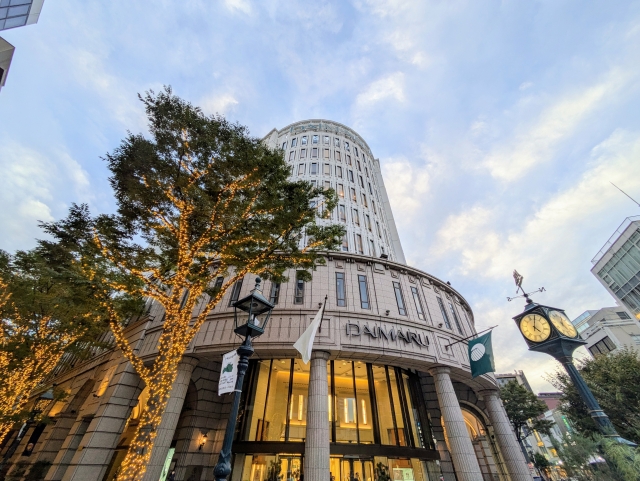
| Kyu-kyoryuchi-Daimarumae | The Old Foreign Settlement & High-end Fashion | Too long; hides the “Old Settlement” charm. |
| Minato Motomachi | Red-brick architecture & chic boutiques | Visitors don’t realise it’s a 5-min walk to JR Motomachi. |
| Harborland | Port Tower, Umie, and the Mosaic waterfront | The most recognisable, but often reached via JR Kobe. |
By failing to explicitly link station names to their JR or Hankyu counterparts (like “Motomachi” or “Kobe”), the line loses out on the “accidental tourist” who might otherwise find it the most convenient way to reach the waterfront. For the savvy traveller, however, the Kaigan Line is the ultimate “short-cut” to the Kyu-kyoryuchi and Harborland, avoiding the surface-level crowds.
The Industrial Heart and the Crimson Tide
Beyond the glitz of Harborland, the line plunges into the industrial and residential heart of Kobe. This is where the “workday” Kaigan Line lives. Passing through Chuo-Ichiba-mae (the Central Wholesale Market) and the heavy industrial zones of Wada-misaki, the line serves the backbone of Kobe’s economy—the factory workers and market traders.
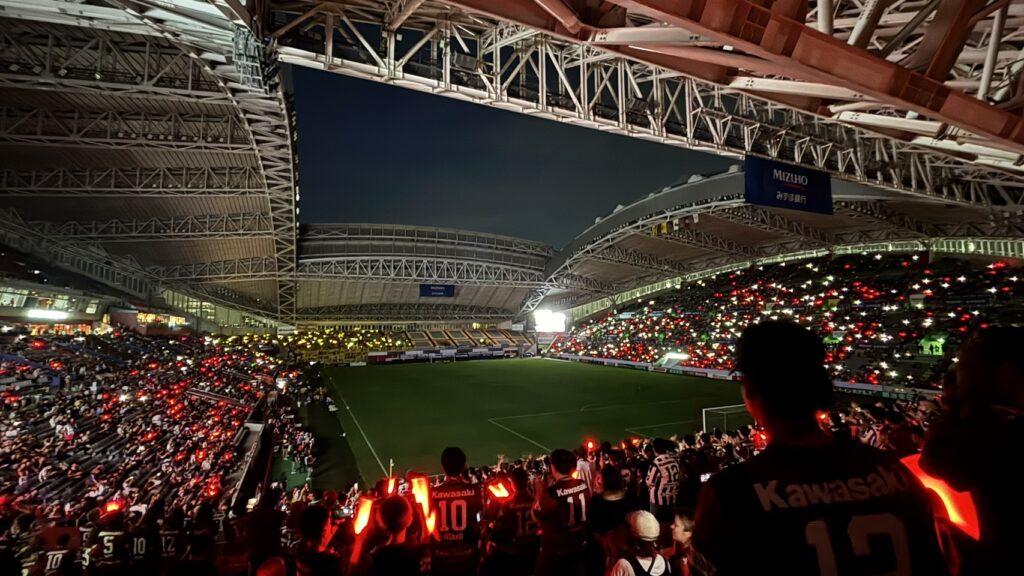
But on match days, the atmosphere undergoes a radical transformation. The line becomes the “Crimson Express” as supporters of Vissel Kobe flood the carriages to head to the Noevir Stadium. While the official guide points fans toward Misaki-koen Station, I can offer a brilliant insider’s tip: Wada-misaki Station is just as viable.
A mere five-minute stroll from Wada-misaki brings you to the stadium gates, often avoiding the concentrated crush of the Misaki-koen crowds. Seeing the blue linear trains packed with fans in crimson jerseys is a testament to the line’s role as a cultural connector. It is the heartbeat of Kobe’s sporting passion. However, this is only for the outbourd! you are not allowed to use Wadamisaki station after the match, if you are headding to city centre like Kobe, Sannomiya.
Terminus at Shin-Nagata: The Cycle of Recovery
The line ends at Shin-Nagata, a district that has become a symbol of Kobe’s post-earthquake resilience. Here, the Kaigan Line meets the Seishin-Yamate Line and JR, completing the “U-shaped” loop of the city’s subway system.
While the residential population in Nagata is on the rise, the Kaigan Line still faces an uphill battle to achieve financial independence. The scars of the 1995 quake—which altered population densities and shifted travel patterns toward the JR lines—are still visible in the balance sheets. Yet, the presence of the “Tetsujin 28-go” (Gigantor) statue near the station serves as a fitting metaphor for the Kaigan Line itself: a sturdy, metallic guardian that, despite the challenges, continues to stand tall and serve the community.

Conclusion: The Understated Lifeline
The Kaigan Line may not have the booming ridership of the JR Kobe Line or the prestige of the Hankyu Line, but it is an essential part of the Kobe mosaic. It is a line for the connoisseur—for the person who values a seat in a “Piccadilly-style” carriage, who appreciates the quiet stroll through Santica, and who knows the “secret” walk from Wada-misaki to the stadium.
It is a railway that honestly reflects Kobe’s history: its struggles, its industrial roots, and its undying maritime spirit. While it may rely on its “Green” brother for financial support for now, the Kaigan Line remains a vital, blue thread in the fabric of a city that refuses to stop moving.